अभी अनुवाद नहीं हुआ है: मूल अंग्रेज़ी संस्करण।
HOW SCARLET FEVER LOST ITS GRIP ON LONDON
Scarlet fever was one of the most feared childhood infections of the 19th century. Between about 1820 and 1880, severe epidemics swept Europe and North America. In the middle of the century, it killed about 10,000 people a year in England and Wales, mostly young children — sometimes within a few days, from a sore throat to the characteristic red rash to death.
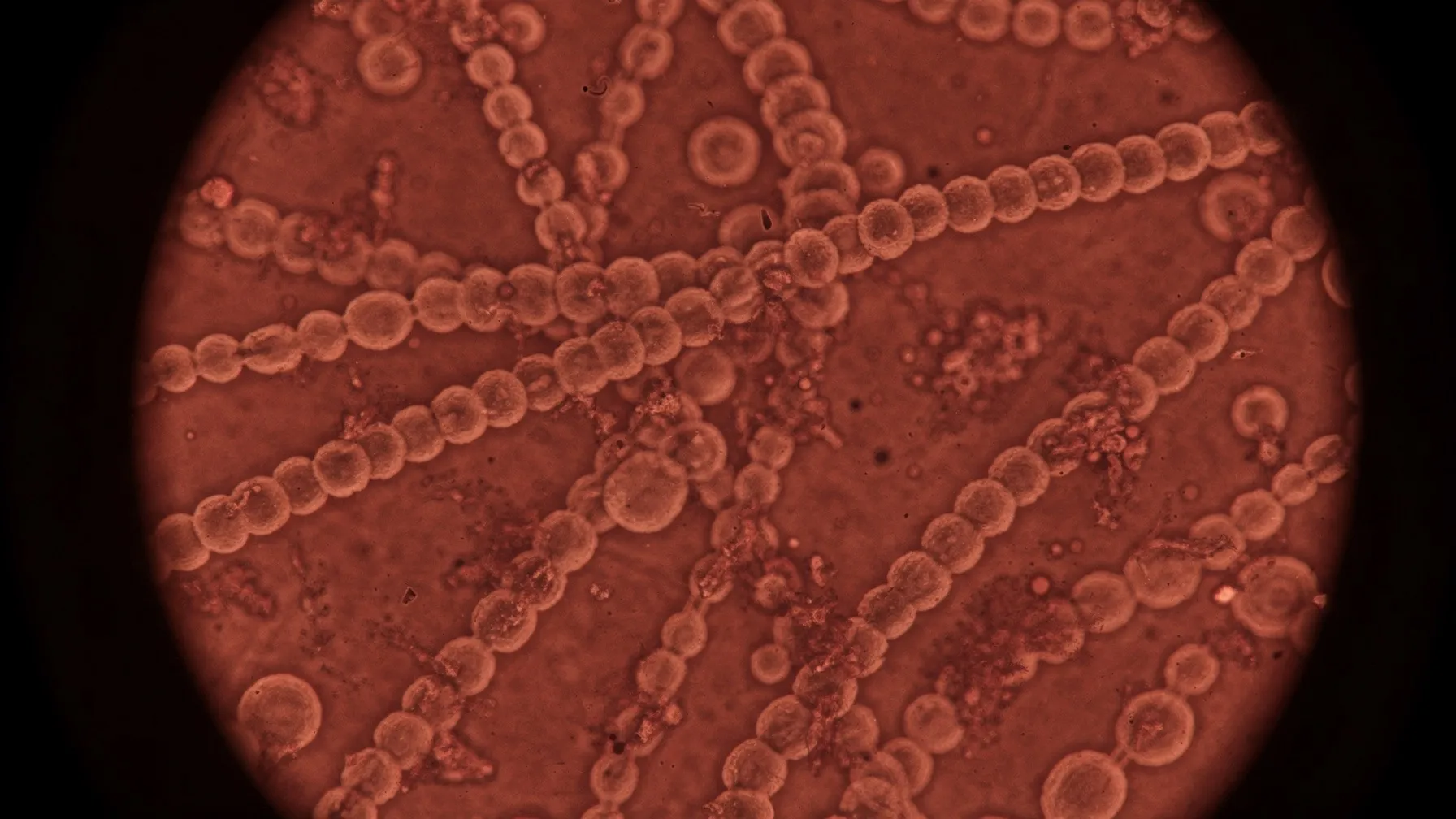
It is caused by the bacterium Streptococcus pyogenes (a group A streptococcus). The link was established in 1924 by George and Gladys Dick. And it can be caught more than once: one infection does not guarantee immunity.
The puzzle
In London, deaths from scarlet fever fell by more than a factor of ten decades before antibiotics — sulfonamides arrived in 1935 and penicillin in 1945. At the same time, the rhythm of the epidemics changed. Can a mathematical model explain these changes through the slow drift of a few parameters?
A century of weekly records
Kevin Zhao and David Earn, of McMaster University in Canada, used the weekly returns of London’s Registrar General:
- weekly deaths from scarlet fever, 1842–1939, and reported cases, 1901–1939;
- weekly births, deaths from all causes, and the ten-yearly censuses — London grew from about 2.25 to 8.6 million people over the period.
They left out the older parish records, dating back to 1696: scarlet fever was often confused with measles there, and the system was collapsing after 1830. They stopped in September 1939, when 1.5 million Londoners, many of them children, were evacuated at the start of the war. The case counts for 1901–1939 were transcribed from archive scans with the help of AI tools (ChatGPT and OpenAI Codex), and a sample was checked by hand.
What the records show
- An epidemic every year, peaking in the autumn.
- On top of it, a multi-year cycle that lengthens: from about 4 years to about 8 years between 1880 and 1920.
- Over the same years, deaths fall from about 2,300 to about 80 a year.
The model
The team fitted a classic SIR model (Susceptible – Infected – Recovered) to deaths and cases together. Transmission rises and falls with the seasons — it is higher when schools are open. They let three things change over time: the average transmission, the strength of the seasonal swing, and the share of cases that were fatal, which falls over time, in line with a historical hypothesis that a milder strain took over around the 1890s. A second, independent method gave almost the same results.
They then asked which epidemic cycles the model predicts in each period — including the slow wobbles that random births and deaths keep alive — and compared them with the observed cycles.
The results
- Almost all the changes in the rhythm of the epidemics are explained by two parameters: the reproduction number (how many people one case infects) and the strength of the seasonal swing.
- The long cycle, from about 3.5 years in 1842 to 7–8 years around 1920, matches a slow wobble predicted by the model that depends almost entirely on the reproduction number. As it fell, the cycles grew longer. The fall came mostly from a steady decline in how easily the disease spread.
- These changes reflect observed shifts in birth rates together with inferred changes in transmission, which may partly come from the evolution of the bacterium itself.
- For measles, changes in births were enough to explain everything. For scarlet fever, they are not.
What remains unexplained
A cycle of about 5 years before 1857, a cycle of about 3 years between 1887 and 1897, and possibly others, remain unexplained. The model also simplifies: it assumes lifelong immunity (not true for scarlet fever), ignores the protection babies get from their mothers, and assumes a single change of strain.
Reading epidemics in old archives
The study extends this kind of analysis — already successful for measles in New York — to a bacterial disease and to death records, estimating things that were never directly observed, such as the fatality rate and transmission. The same tools can be applied to other historical records of infectious diseases.