2026年9月29日版

  1. 太空与天文

    A STAR TORN APART AT COSMIC DAWN

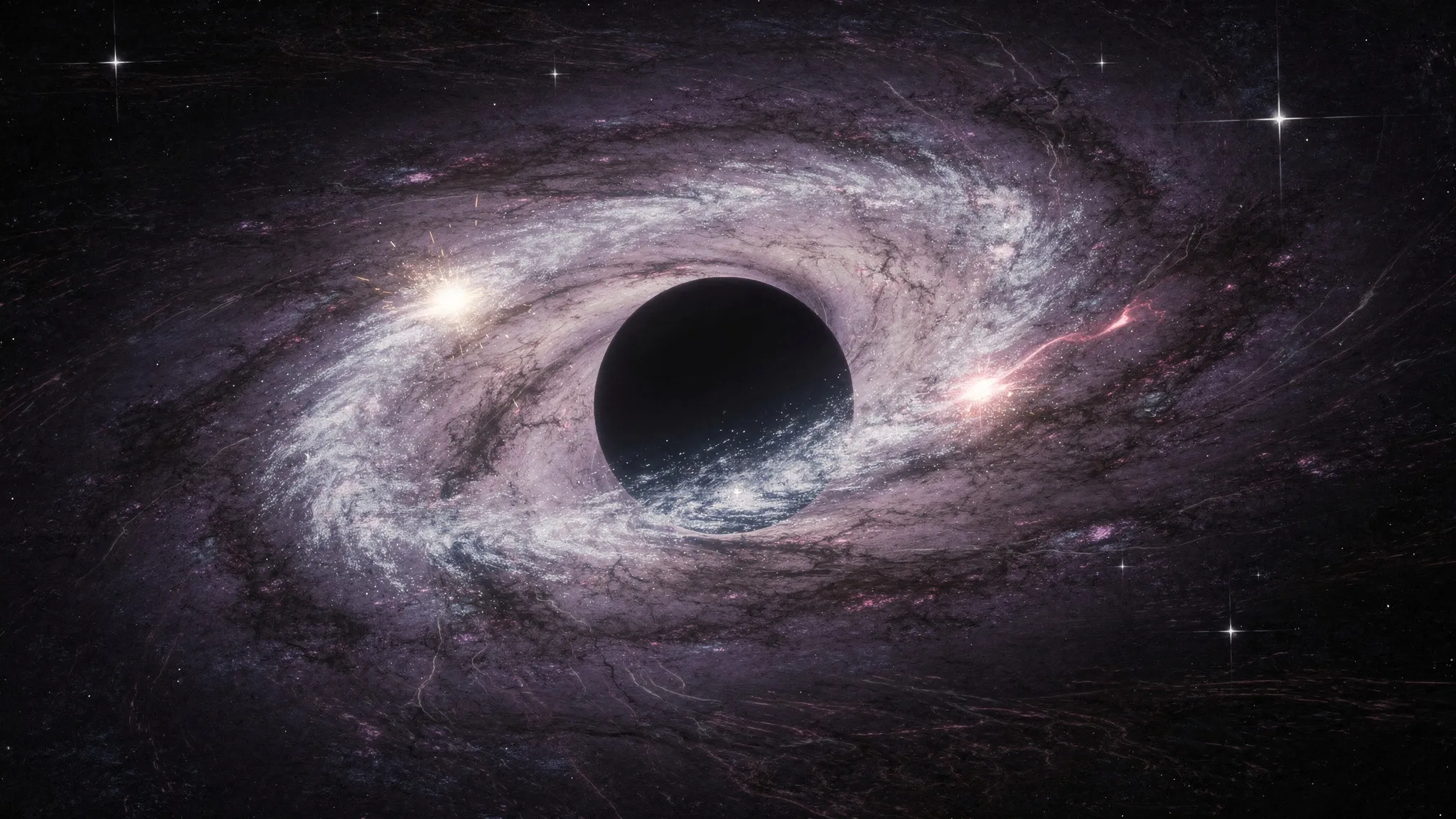
    A dark black hole at the centre of a swirling bright disc of gas and stars, a flare streaming out to one side, in violet tones against a starry sky.

    Astronomers compared new James Webb images with old Hubble ones. One quasar, GNz7q, had faded by about one magnitude. It sits at redshift 7.19, 700 million years after the Big Bang.

    Twenty years of archives show a fast rise, then a smooth fade over about two years in its own time. Only about 0.1% of quasars vary this much.

    The best explanation: a star of a few solar masses ripped apart by the black hole. The flare released about 1.5 × 10⁵³ erg. It ranks among the most energetic such events known.

    Webb also caught the echo. Dust about half a parsec away, heated to about 1,500 K, glows after the flash. Until now, confirmed star-shredding events stopped near redshift 1.2.

    Source: A tidal disruption event in a quasar at redshift 7.19, https://arxiv.org/abs/2609.30441
    预印本观测阅读 3 分钟
  2. 太空与天文

    ONE SUPERNOVA, SEEN SEVERAL TIMES

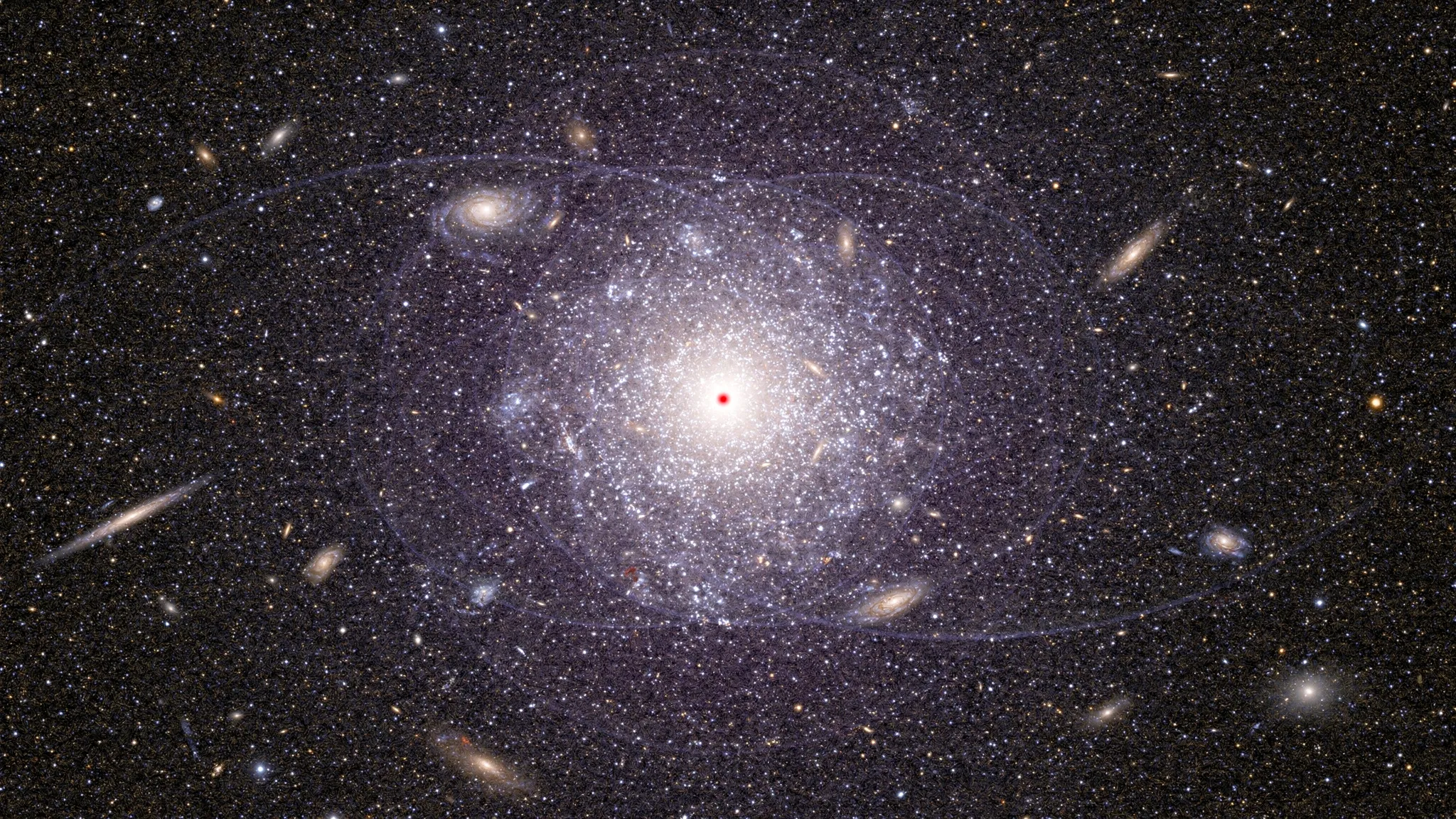
    A dense swarm of stars and galaxies around a bright cluster core, a small red point of light at its centre and faint arcs curving around it, in violet tones.

    On 3 July 2026, the James Webb telescope imaged a massive galaxy cluster. A small red dot appeared that was not there in 2024. Its colours said: a galaxy at redshift 16.

    A spectrum taken on 17 August told another story. Broad hydrogen lines revealed an exploding star at redshift 3.34. Its gas is racing outward at 7,000 to 9,000 km/s.

    The cluster acts as a lens. It magnifies the explosion about 11 times and splits its light into several images. Five models predict the next one between 2028 and 2032.

    Timing that comeback could measure how fast the universe expands. SN Helios is the first beyond redshift 2 with a comeback this close. And it warns galaxy hunters: some record candidates may be impostors.

    Source: SN Helios: A Multiply Imaged Type II Supernova Opening Time-Delay Cosmography beyond redshift of 3, https://arxiv.org/abs/2609.30440

    预印本观测阅读 4 分钟
  3. 物理

    100 ATTOSECONDS, 10 TERAWATTS

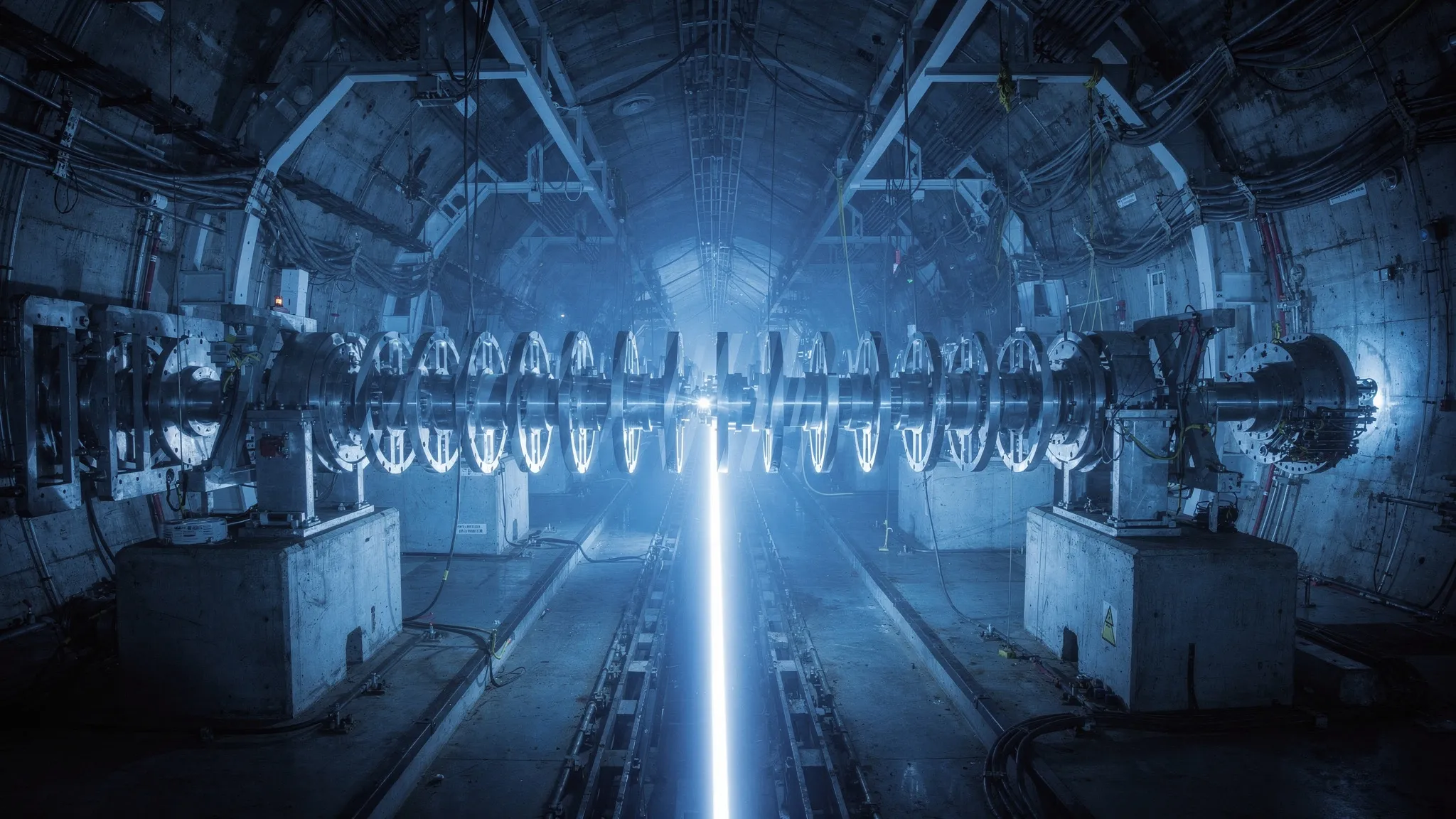
    A long underground tunnel with a row of large metal ring-shaped modules on concrete supports, a thin bright beam of light running along its axis in cobalt blue.

    An attosecond is a billionth of a billionth of a second. Pulses that short can film electrons moving inside atoms and molecules. This field won the 2023 Nobel Prize in Physics.

    At the European XFEL in Germany, a team squeezed bunches of electrons five times in a row. Normal operation uses three steps. Simulations put the current at 150,000 amperes.

    The electrons then emitted soft X-ray flashes lasting about 100 attoseconds. Some carried up to 3 millijoules. Their peak power reached about 10 terawatts.

    Such energy in so short a flash is unprecedented for attosecond X-rays, the authors say. With tens of thousands of pulses per second, researchers can keep the best ones. The length is inferred from the spectrum, not timed directly.

    Source: Generation of 10-TW Attosecond X-Ray Pulses in a Free Electron Laser, https://arxiv.org/abs/2609.31534

    预印本实验阅读 3 分钟
  4. 物理

    THE PAPER STACK THAT BOUNCES BACK

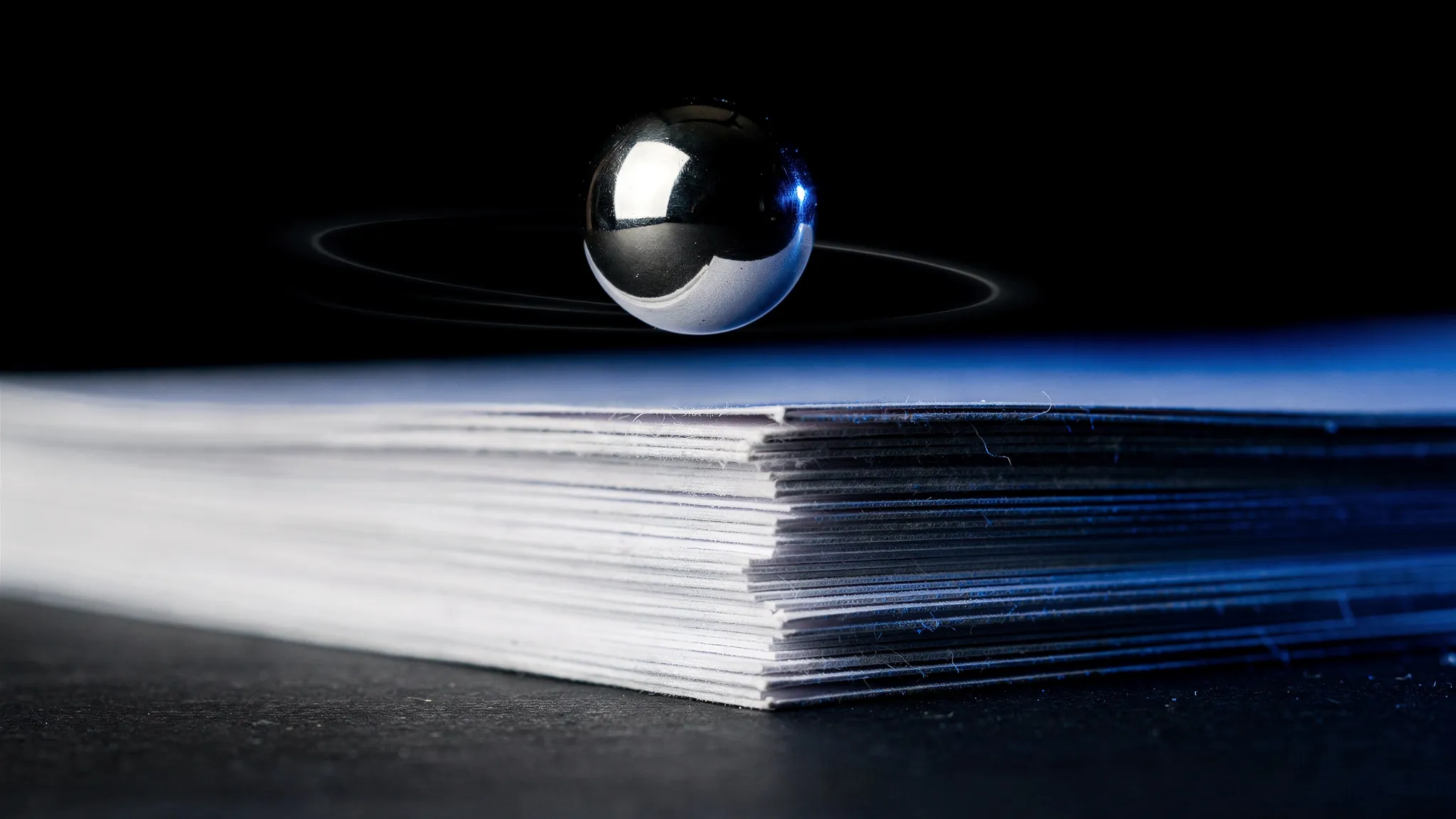
    A small steel ball bouncing above a neat stack of white printer paper on a dark table, lit in cobalt blue, with faint circular motion trails around it.

    Drop a ball on a cushion, and it bounces less. Add more cushion, and it should bounce even less, right? A stack of ordinary printer paper says otherwise.

    Physicists in Amsterdam dropped a steel ball on stacks of up to 500 A4 sheets. With ten sheets, the rebound fell from 0.71 to 0.50. Then it climbed back, peaking around 58 sheets.

    The impact sends a sound wave down the stack. It bounces off the table and comes back up. If it returns while the ball still touches the paper, it pushes the ball upward.

    The surprise: the air trapped between sheets does most of the work. Each gap is about 15 micrometres thick. Pump most of the air out, and this paper trampoline stops working.

    Source: The Paper-Stack Trampoline: Acoustic Restitution in Layered Media, https://arxiv.org/abs/2609.31213

    预印本实验阅读 4 分钟
  5. 数学

    ♛ CHESS QUEENS THAT FOLLOW THE GOLDEN RATIO

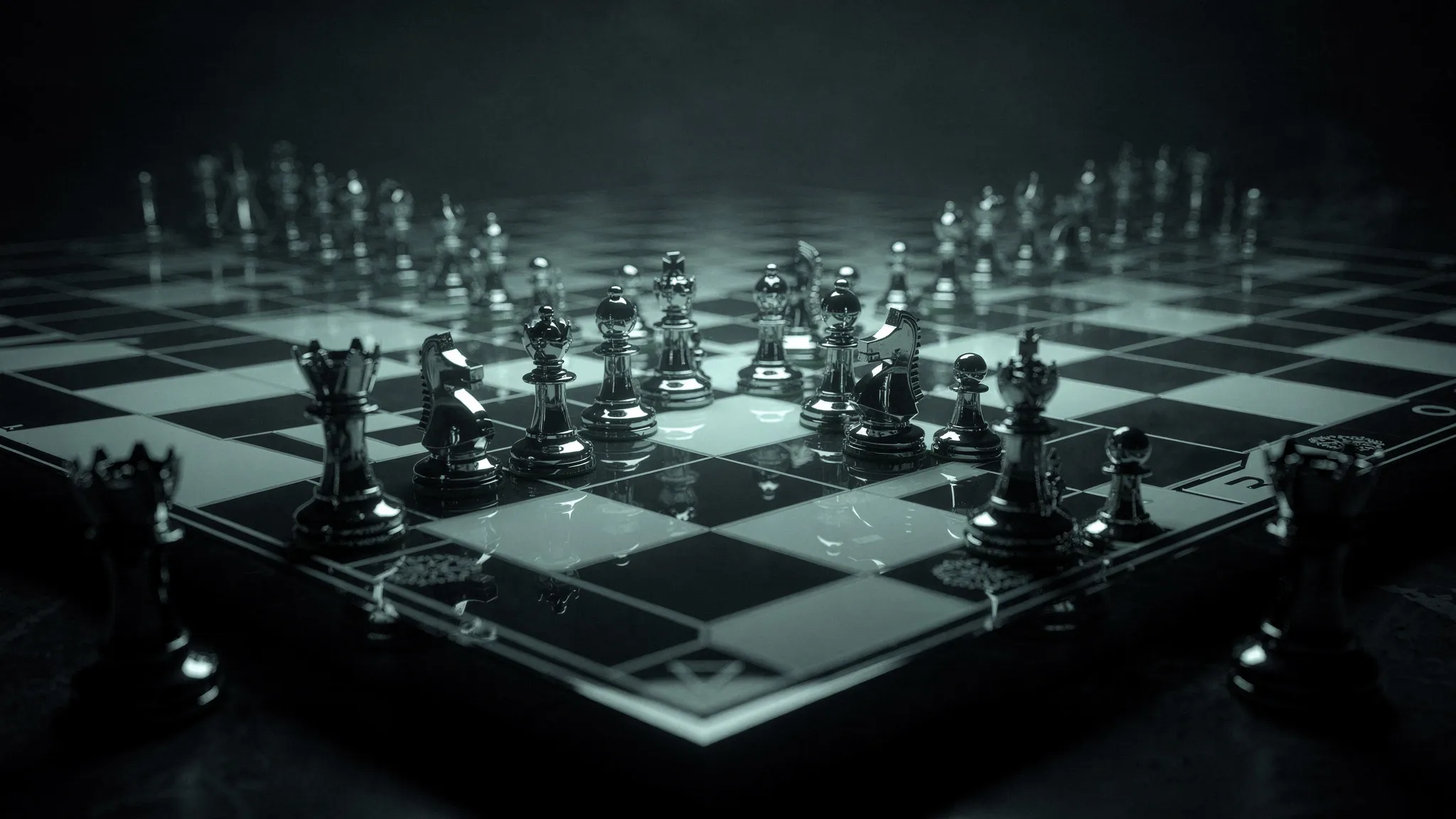
    Polished chess pieces standing on a vast chessboard that fades into darkness, lit in dark cyan.

    Take a chessboard with no end. Put a queen in the corner. Then add one queen per column, always on the lowest square no other queen attacks.

    The queens split into two lines. One climbs with a slope of 1.618, the other with 0.618. Both numbers come from the golden ratio, φ = (1 + √5)/2.

    Mathematicians conjectured this in 2020, and Donald Knuth checked it up to a billion columns. Now Boon Suan Ho, in Singapore, has proved it. No queen ever strays more than about 7 squares from its line.

    The key step was checked by computer across 7,014 possible situations. And the author says the proof itself was found with the AI GPT-6 Pro. The checking code is public, with a Lean formalization.

    Source: Greedy queens and the golden ratio, https://arxiv.org/abs/2609.31336

    预印本理论阅读 3 分钟
  6. 生命科学

    ONE RNA MOLECULE TO START IT ALL?

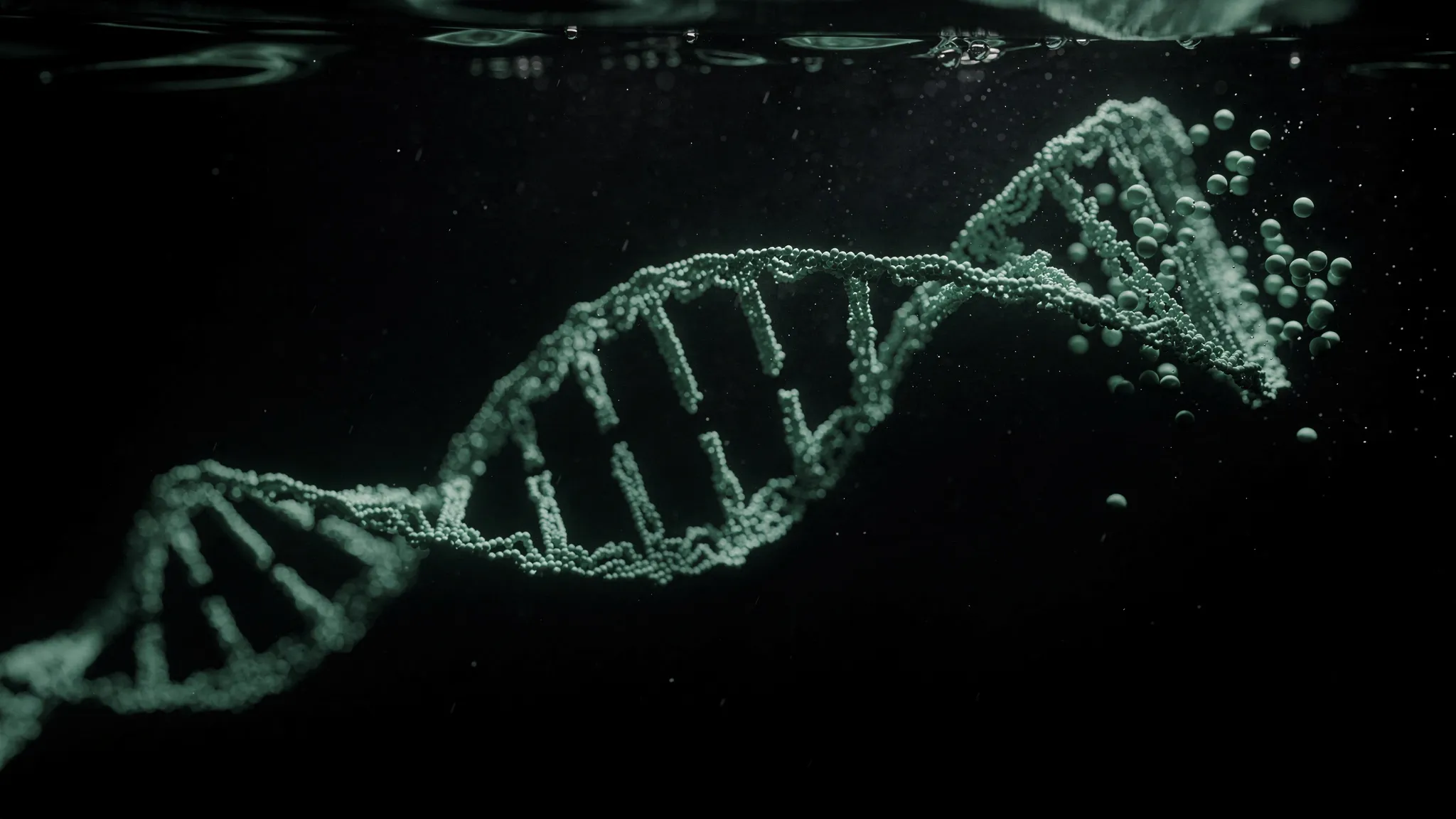
    A beaded double helix floating in dark water, small beads drifting away from one end, lit in deep jade green.

    Life faces a chicken-and-egg puzzle. Proteins are built by the ribosome, yet the ribosome needs proteins to work well. So which came first?

    Three researchers in France and Australia propose an answer: neither. In their hypothesis, one RNA molecule copied itself and also began making peptides. They call it the riboreplisome.

    They sketch 12 steps from a simple RNA copier to a ribosome and a genome. Only the first two need a stroke of chemical luck. The other ten could follow through ordinary natural selection.

    In their simulations, the single molecule ends almost six times fitter than a "soup" of cooperating RNAs. The main reason: useful products stay next to the genes that made them. It remains a theory, and the authors propose four ways to test it.

    Source: Pathways of early evolution from the perspectives of a riboreplisome – the ultimate RNA machine of life, https://arxiv.org/abs/2609.30816

    预印本理论阅读 3 分钟
  7. 医学与健康

    YOUR BIOLOGICAL AGE MAY BE LYING

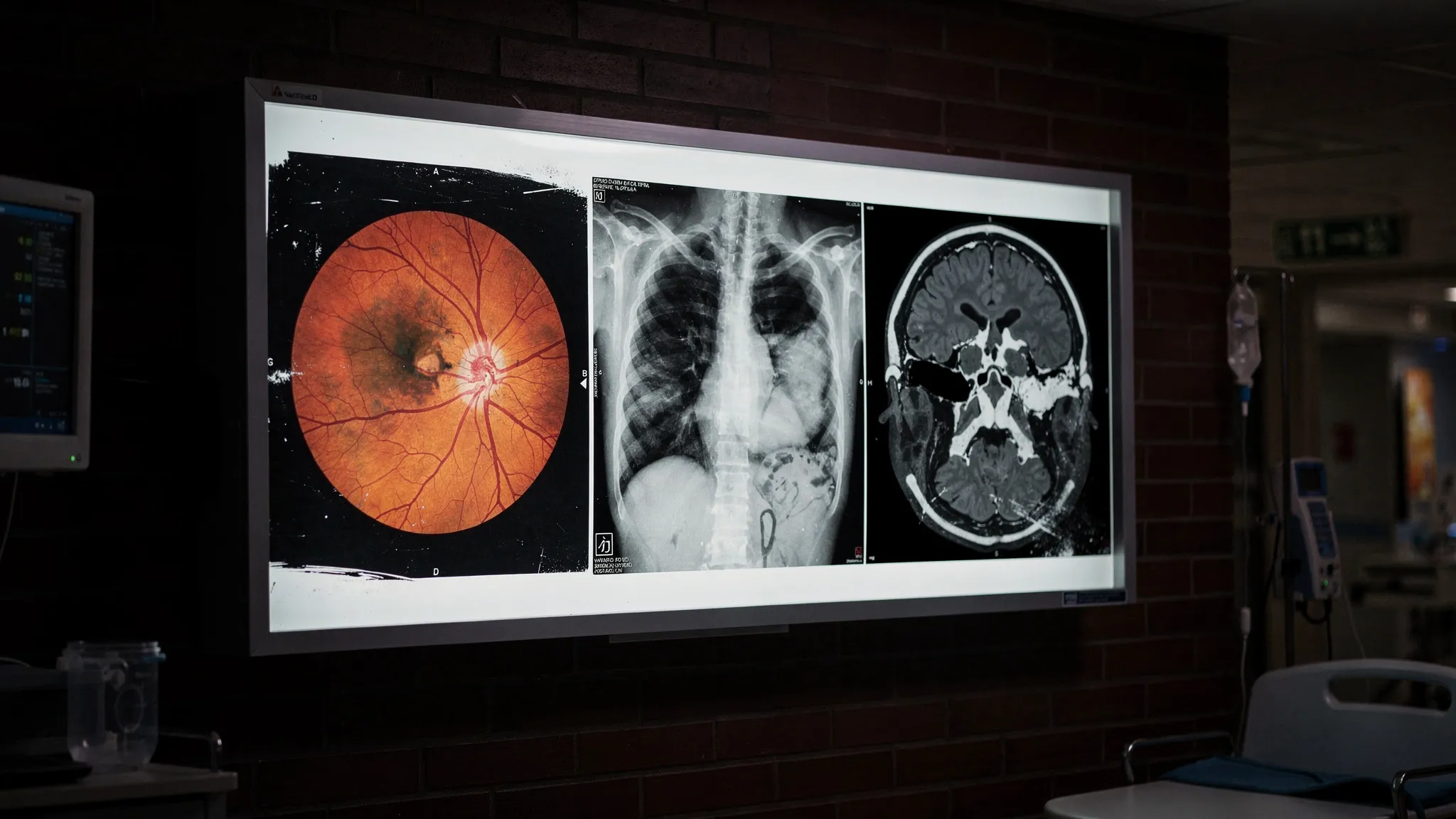
    A medical light box on a dim hospital wall displaying a retinal photograph, a chest X-ray and a brain MRI slice side by side.

    AI models can now guess your age from an eye photo, a chest X-ray, a brain scan or a blood test. If the guess exceeds your real age, you are said to age faster.

    A team led from University College London tested five such "ageing clocks". All four organ-based clocks share a hidden bias. They pull estimates toward the average age, more strongly for sick people than for healthy ones.

    The result: the link between "older-looking" and "sick" fades with age. For chest X-rays, it even reverses after 70. Recalibrating or retraining did not remove the bias.

    Pairing one healthy and one sick person of the same age, the healthy one looked older in 25% to 59% of pairs. The authors warn: no clock can yet judge one person's health alone.

    Source: Prediction bias in biological ageing markers, https://arxiv.org/abs/2609.30322

    预印本数据分析阅读 3 分钟
  8. 地球与气候

    CLOUDS WITHOUT FLUID MECHANICS

    A field of white cumulus clouds over a calm sea, seen from low altitude, with a faint dark olive green tint in the afternoon light.

    Weather models solve the equations of fluid motion on a grid. To be exact, they would need grid cells about a millimetre wide. Even the best models resolve less than half of the relevant scales.

    A PhD thesis at the University of Utah tries something else. It builds the atmosphere from "turbulons", formal eddies of all sizes stacked like building blocks. No fluid equations, no time steps.

    The resulting 3D cloud fields broadly match high-resolution simulations, with clear flaws. Seen from space, their geometry matches satellite images as well as or better than the reference simulations.

    Each independent snapshot costs 100,000 to a million times less computing. But the model needs average profiles from another model. And without time steps, it cannot forecast tomorrow's weather.

    Source: Weather and Climate Without Fluid Mechanics, https://arxiv.org/abs/2609.30589

    预印本模拟阅读 4 分钟
  9. 计算机与人工智能

    A 281-GRAM ROBOT JUMPS 7.6 METRES

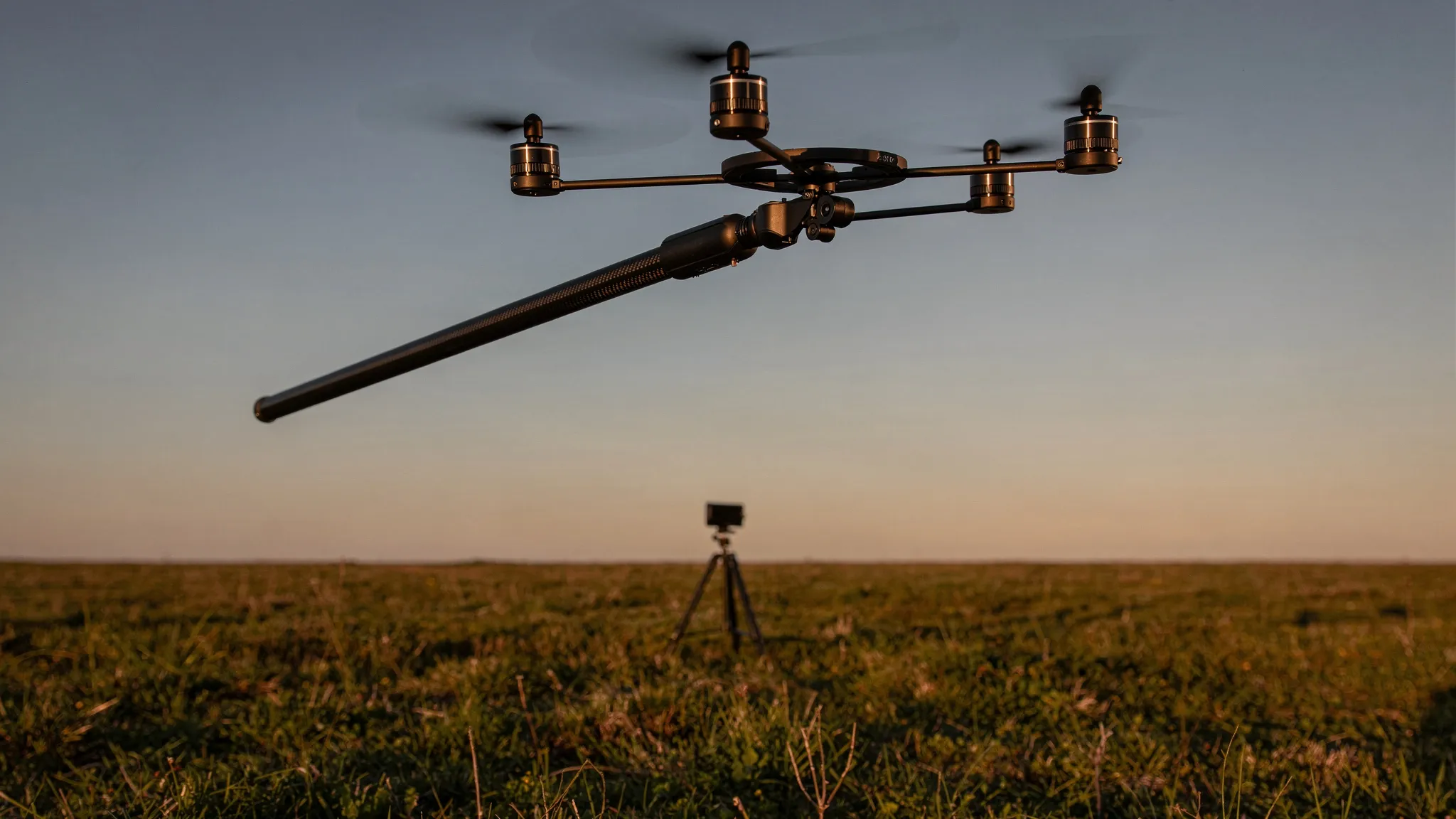
    A thin carbon-fibre pole robot with four small propellers at its top, caught in mid-air above a grassy field, a small tripod in the distance, in warm evening light.

    The best robot jumpers cheat a little. They slowly wind up a spring, lock it, then let go. One record holder rests about two minutes between jumps.

    Engineers at the University of Illinois took the other road. Their robot weighs 281 grams. It has one carbon leg nearly two metres long, driven straight by a small motor, with no spring at all.

    The trick is a ribbon of fabric wrapped around the leg like a candy-cane stripe. It keeps the motor near full power and stops the thin leg from buckling.

    Result: a 7.6-metre leap after just 190 milliseconds on the ground. Four small propellers at the top keep the long leg upright. It is the highest jump reported for an electric robot without springs.

    Source: A Long-Legged, Direct-Drive Monopedal Robot Achieves Exceptional Jump Height, https://arxiv.org/abs/2609.30530

    预印本实验阅读 5 分钟
  10. 计算机与人工智能

    ONE SENTENCE TRAPS AI DRIVERS IN A JAM

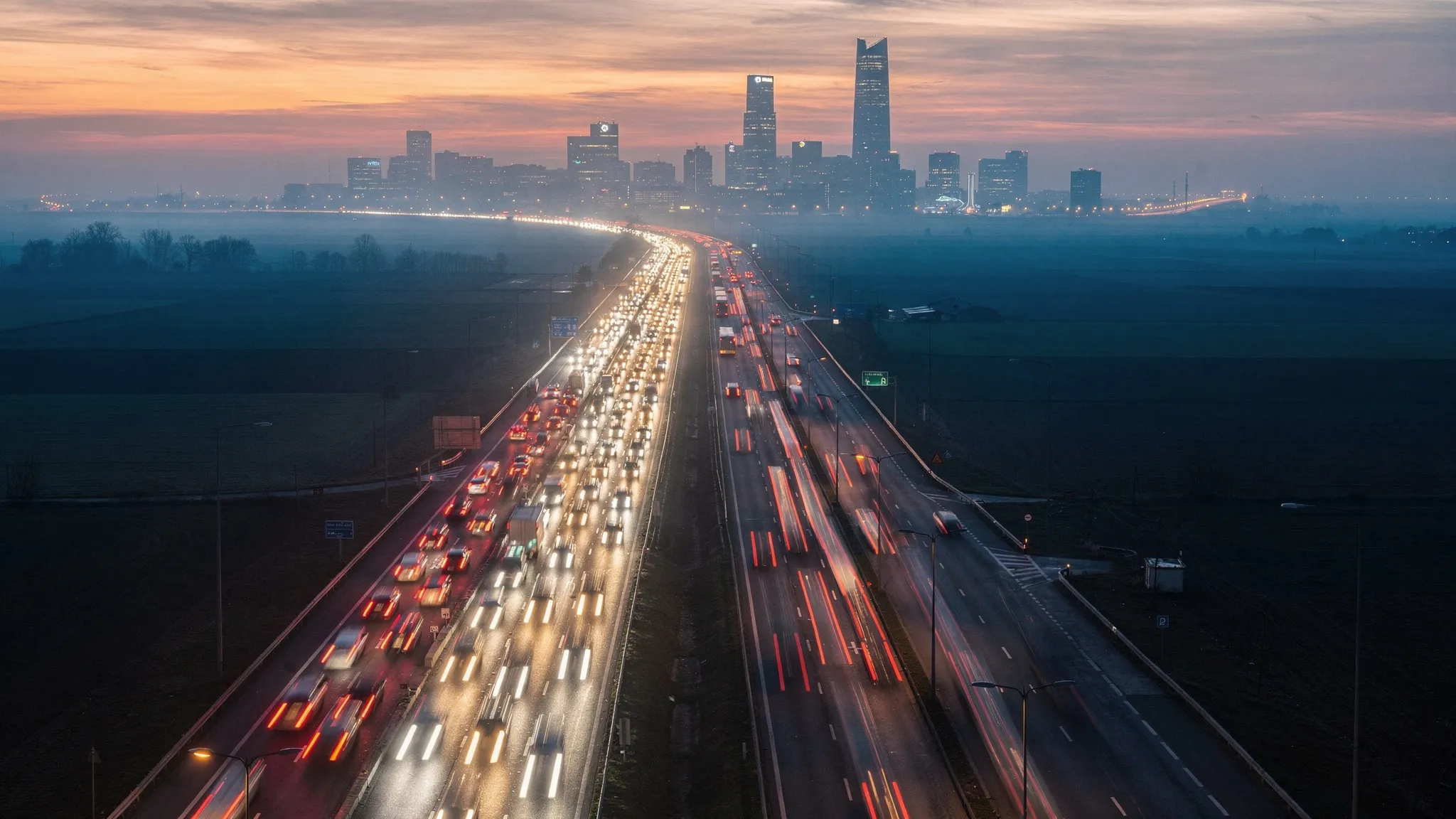
    Aerial view at dusk of a highway splitting into two roads toward a distant city, one jammed with cars and headlights, the other carrying fewer, faster-moving cars, in warm amber light.

    Two identical roads, 50 AI drivers built on the same model. Each morning, a traffic broadcast names the emptier road. The agents use it well: about 64 minutes per trip, close to the ideal hour.

    Researchers in Tokyo then added one sentence. Many drivers will hear this tip and switch, so that road may jam. Result: about 96% of agents stayed on the same crowded road.

    Average trip time jumped to 95 minutes. Any agent could have saved 69 minutes by switching alone. After 100 rounds, not one of the ten groups had escaped.

    Groups of 20 humans under the same warning stayed near balance. In mixed groups, people increasingly took the road the agents kept avoiding. With 15 agents, humans averaged 44 minutes and agents 80.

    Source: Warned alike, AI agents avoid the less-crowded road while people take it, https://arxiv.org/abs/2609.30883

    预印本实验阅读 5 分钟
Legal notice