Edição de 30 de setembro de 2026

  1. Espaço e astronomia

    UM GIGANTE ESCONDIDO NA VIZINHANÇA?

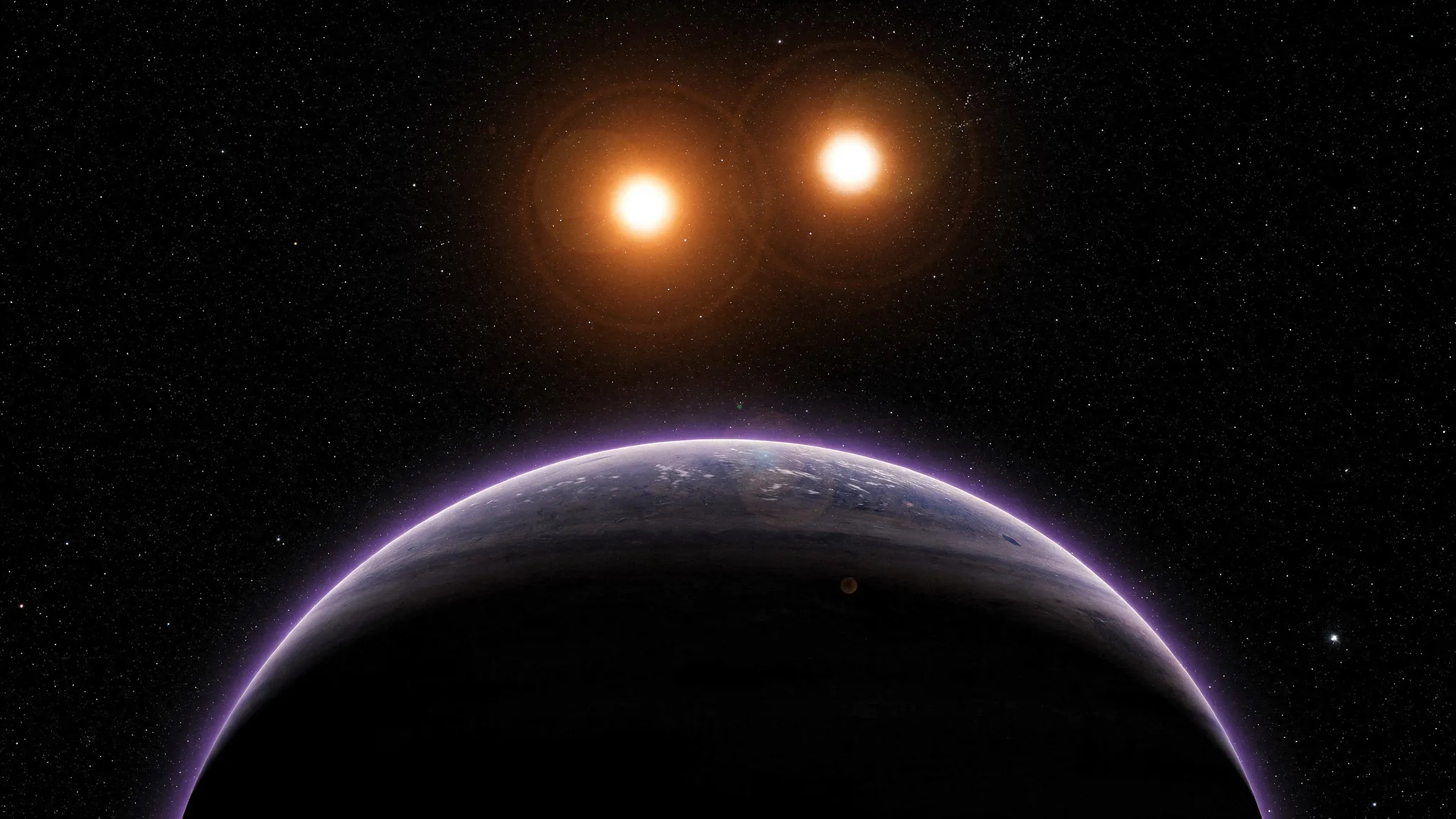
    Duas estrelas alaranjadas lado a lado no espaço profundo, com um planeta gigante escuro, levemente iluminado na borda, em primeiro plano.

    61 Cygni é um par de estrelas alaranjadas a apenas 3,5 parsecs. Foi a primeira estrela a ter sua distância medida. Telescópios futuros querem procurar gêmeas da Terra ali.

    Algo invisível puxa uma das duas estrelas. Dados do Gaia e do Hipparcos revelam uma pequena oscilação no movimento delas. Nenhum planeta jamais foi confirmado ali.

    Uma equipe combinou 37 anos de medições e um milhão de órbitas simuladas. O melhor ajuste: um gigante frio com cerca de oito vezes a massa de Júpiter, umas oito vezes mais longe de sua estrela do que a Terra está do Sol.

    Se estiver perto o bastante, ele devastaria a zona habitável, onde uma gêmea da Terra poderia viver. Mais longe e com órbita inclinada, também. Então, antes de caçar Terras ali, os astrônomos precisam confirmar esse candidato.

    Fonte: Worlds Next Door. V. A Candidate Solar System Scale Super-Jupiter in the 61 Cygni Binary System, https://arxiv.org/abs/2609.32893
    Pré-publicaçãoAnálise de dados4 min de leitura
  2. Física

    QUÃO FÁCIL É FORMAR ANTIMATÉRIA?

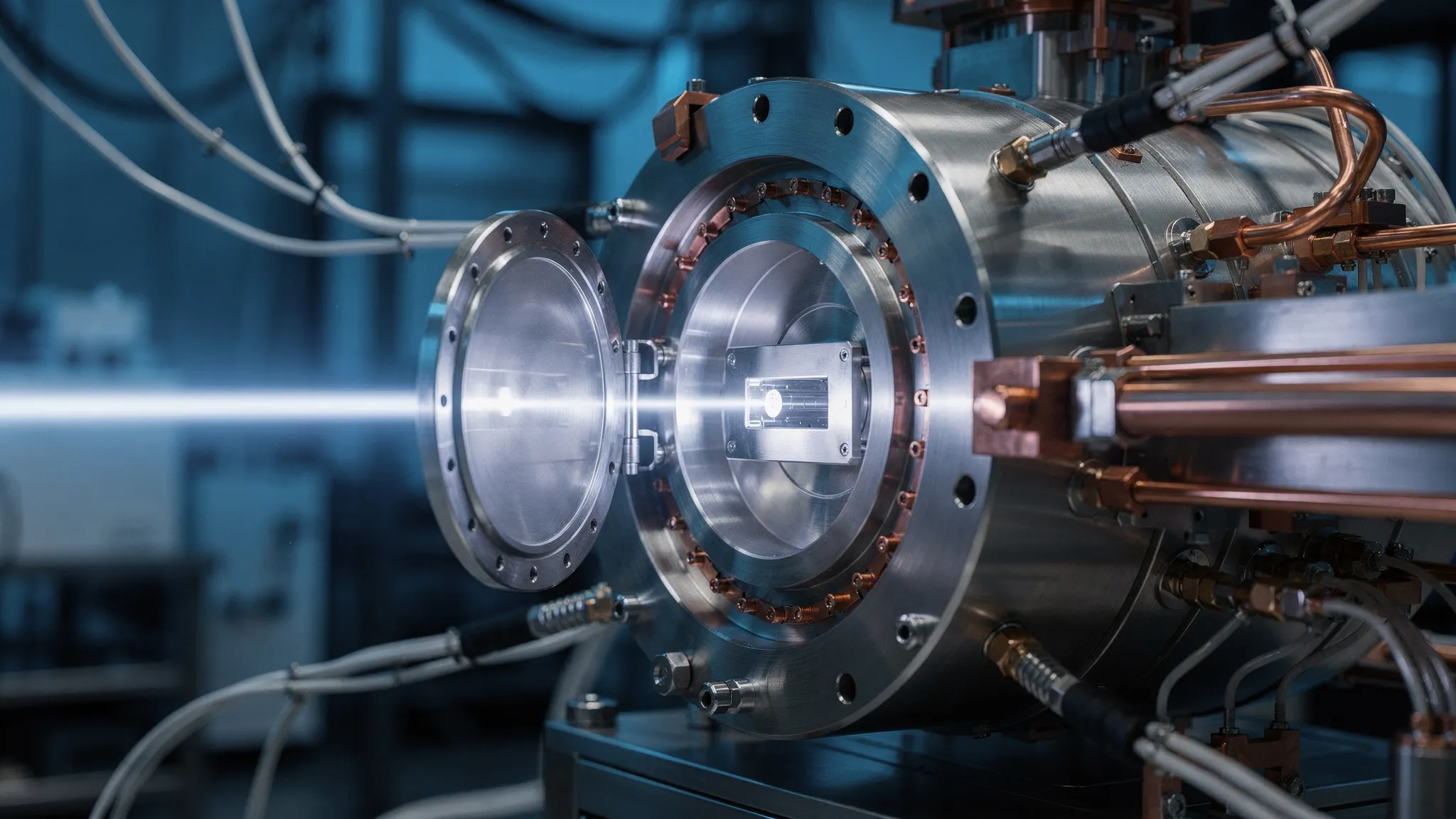
    Um feixe estreito de partículas entrando em uma pequena cavidade luminosa dentro de uma câmara de vácuo de aço, iluminada em azul.

    O anti-hidrogênio é o gêmeo espelhado do hidrogênio: um antipróton com um pósitron. A equipe do GBAR, no CERN, quer soltá-lo e vê-lo cair. Primeiro, precisa produzi-lo com eficiência.

    A receita: disparar antiprótons em uma nuvem de positrônio, um átomo feito de um elétron e um pósitron. Às vezes, um antipróton rouba o pósitron.

    Pela primeira vez, mediu-se quão provável isso é. Cerca de 390 átomos de anti-hidrogênio a 6 quiloelétron-volts, cerca de 70 a 4. As probabilidades concordam muito bem com dois cálculos quânticos independentes.

    As incertezas são menores que as da única medição da mesma reação com matéria comum, de 1997. Esses números agora determinam a rapidez com que o GBAR poderá reunir átomos para seu teste de queda livre da antimatéria.

    Fonte: First measurement of the antihydrogen production cross section through the charge-exchange reaction of low-energy antiprotons with orthopositronium, https://arxiv.org/abs/2609.33990

    Pré-publicaçãoExperimento3 min de leitura
  3. Terra e clima

    EM 2025, A TERRA VOLTOU A RESPIRAR

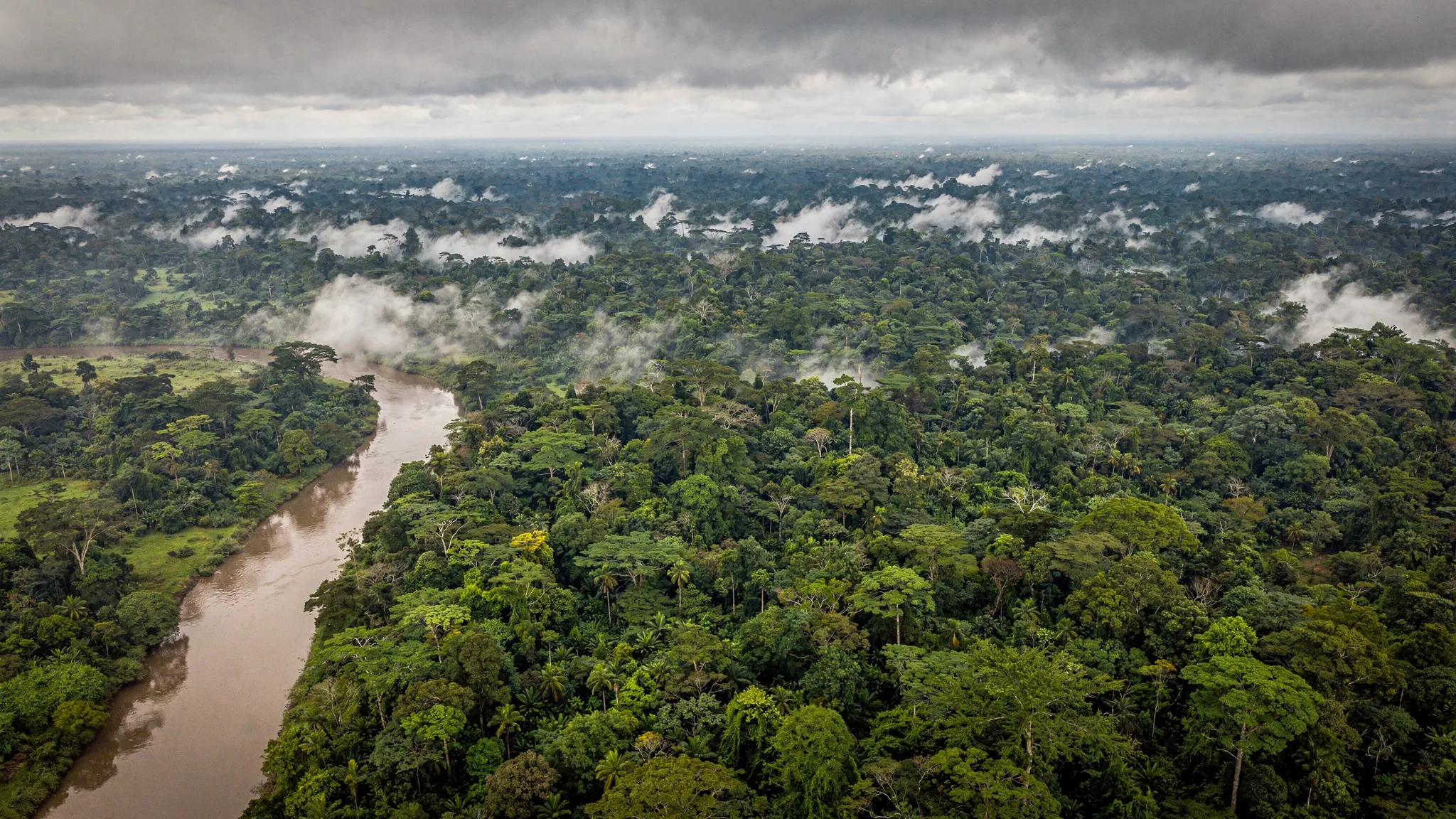
    Vista aérea de uma floresta tropical verde depois da chuva, com névoa subindo entre as árvores sob um céu encoberto.

    Em 2024, o dióxido de carbono no ar cresceu em ritmo recorde. Em 2025, a taxa de crescimento caiu 45%. Mesmo assim, as emissões fósseis ainda subiram 0,7%.

    Como isso é possível? Uma equipe liderada a partir da França e da China combinou modelos de vegetação, modelos oceânicos e o satélite OCO-2. Ela montou um balanço de carbono de 2025 em poucos meses, e não em um ano.

    A resposta é a terra. Florestas e solos absorveram cerca de 2,4 bilhões de toneladas de carbono em 2025. Em 2024, não tinham absorvido quase nada, ou até liberado carbono. O oceano mal mudou.

    Os trópicos se recuperaram mais, sobretudo a África. As terras do norte se recuperaram só em parte. O CO2 no ar continua subindo, apenas mais devagar. E esse sumidouro oscila com as secas e o El Niño.

    Fonte: Low latency global carbon budget reveals strong land sink recovery in 2025, https://arxiv.org/abs/2609.34226

    Pré-publicaçãoAnálise de dados3 min de leitura
  4. Medicina e saúde

    A LASER IN A CONTACT LENS

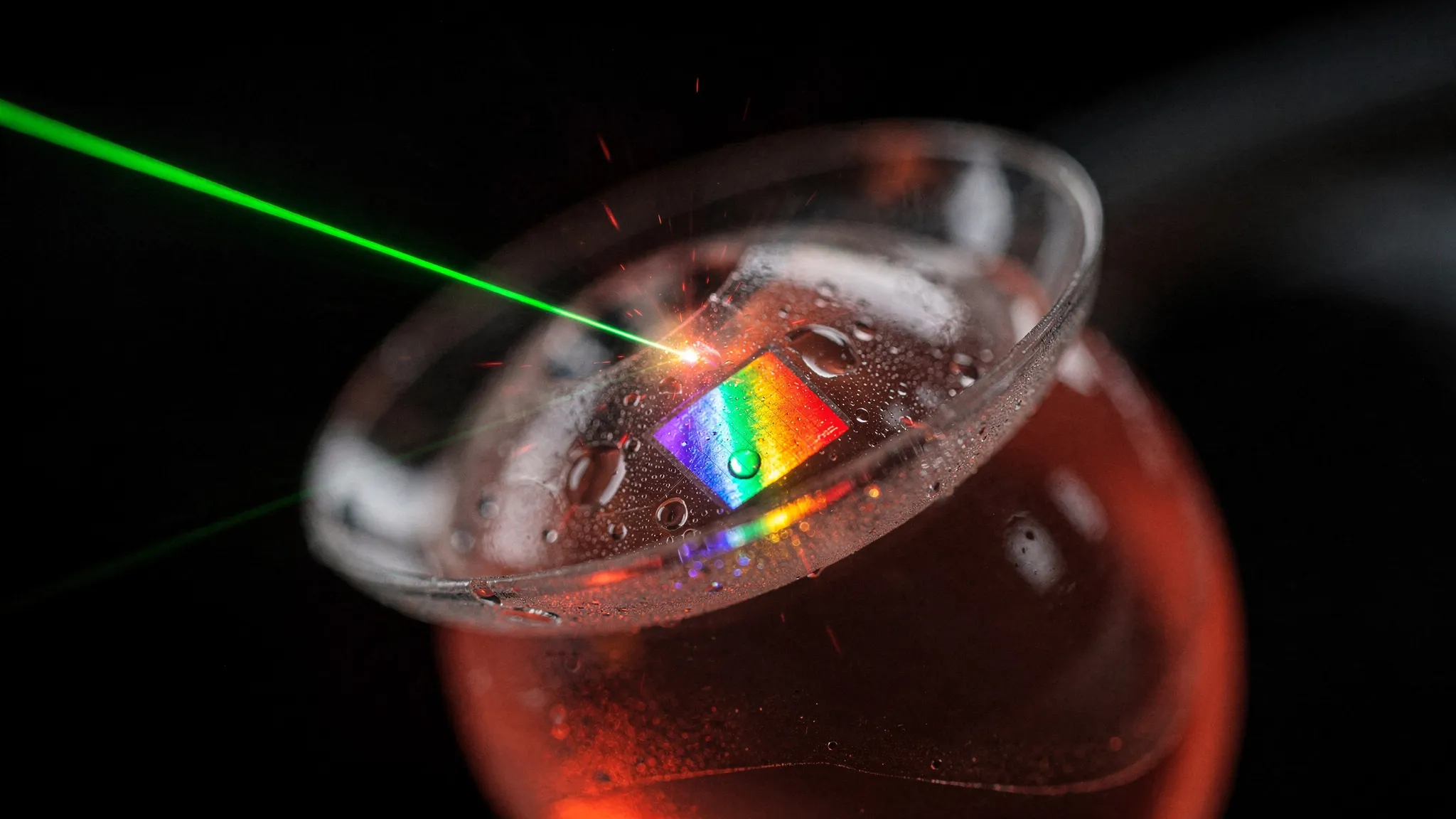
    A clear soft contact lens resting on a red-lit artificial eye, a green laser beam hitting a small rainbow-sheened patch near its centre.

    Glaucoma is managed by tracking the pressure inside the eye. Today, it is measured only at the clinic, now and then. Daily swings go unnoticed.

    A company team in Dubai built a soft contact lens with a tiny laser on it. A dye film, thinner than a micrometre, glows when flashed with green light. Its colour shifts as the lens stretches.

    On an artificial eye, raising the pressure turned the laser line slightly redder. The sensor read pressure to within about 1.2 millimetres of mercury. That is about the precision monitoring requires.

    No human or animal eye was tested yet. The pump laser and spectrometer are still outside the lens. Temperature also shifts the reading. The authors hold a patent on the design.

    Source: Contact lens with stretchable distributed-feedback laser for intraocular pressure monitoring, https://arxiv.org/abs/2609.34476

    Pré-publicaçãoExperimento3 min de leitura
  5. Ciências da vida

    CÉLULAS QUE SE DIVIDEM MANTÊM OS REDEMOINHOS PERFEITOS

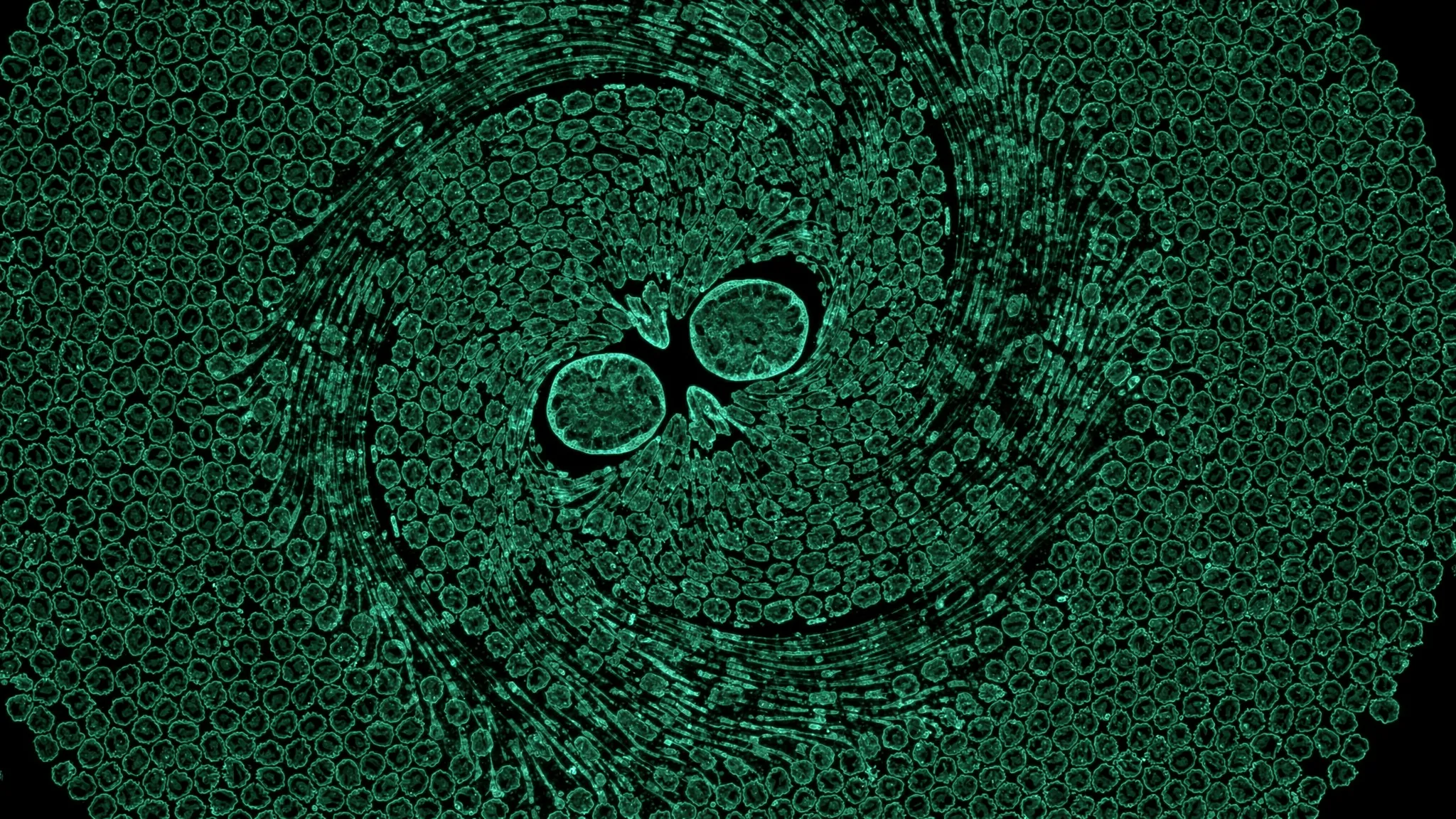
    Vista ao microscópio de uma camada densa de células epiteliais, com uma célula no centro se dividindo em duas, iluminada em verde.

    Em uma camada de células epiteliais, as células giram juntas em jatos e vórtices. As linhas entre os redemoinhos horários e anti-horários seguem uma geometria universal rigorosa. Ela parece a mesma vista de perto, de longe ou girada.

    Físicos de Copenhague bloquearam a divisão celular com dois medicamentos diferentes. As células continuaram se movendo e girando. Mas a geometria especial se desfez. Seu número-chave saltou de 6 para cerca de 8.

    Bloquear a morte celular, em vez disso, não mudou nada. Um modelo de computador confirmou o culpado: sem divisões, as células trocam menos de vizinhas. O tecido fica rígido e excessivamente restrito.

    Ou seja, a divisão faz mais do que produzir novas células. Ela mantém a camada celular flexível o bastante para se reorganizar. Os autores sugerem que medicamentos anticâncer que interrompem a divisão também poderiam mudar a forma como os tecidos se movem. Essa ideia ainda não foi testada.

    Fonte: Cell division sets a universal flow geometry in cell layers, https://arxiv.org/abs/2609.34631

    Revisado por paresExperimento3 min de leitura
  6. Espaço e astronomia

    HUBBLE CATCHES A LAVA WORLD'S GLOW

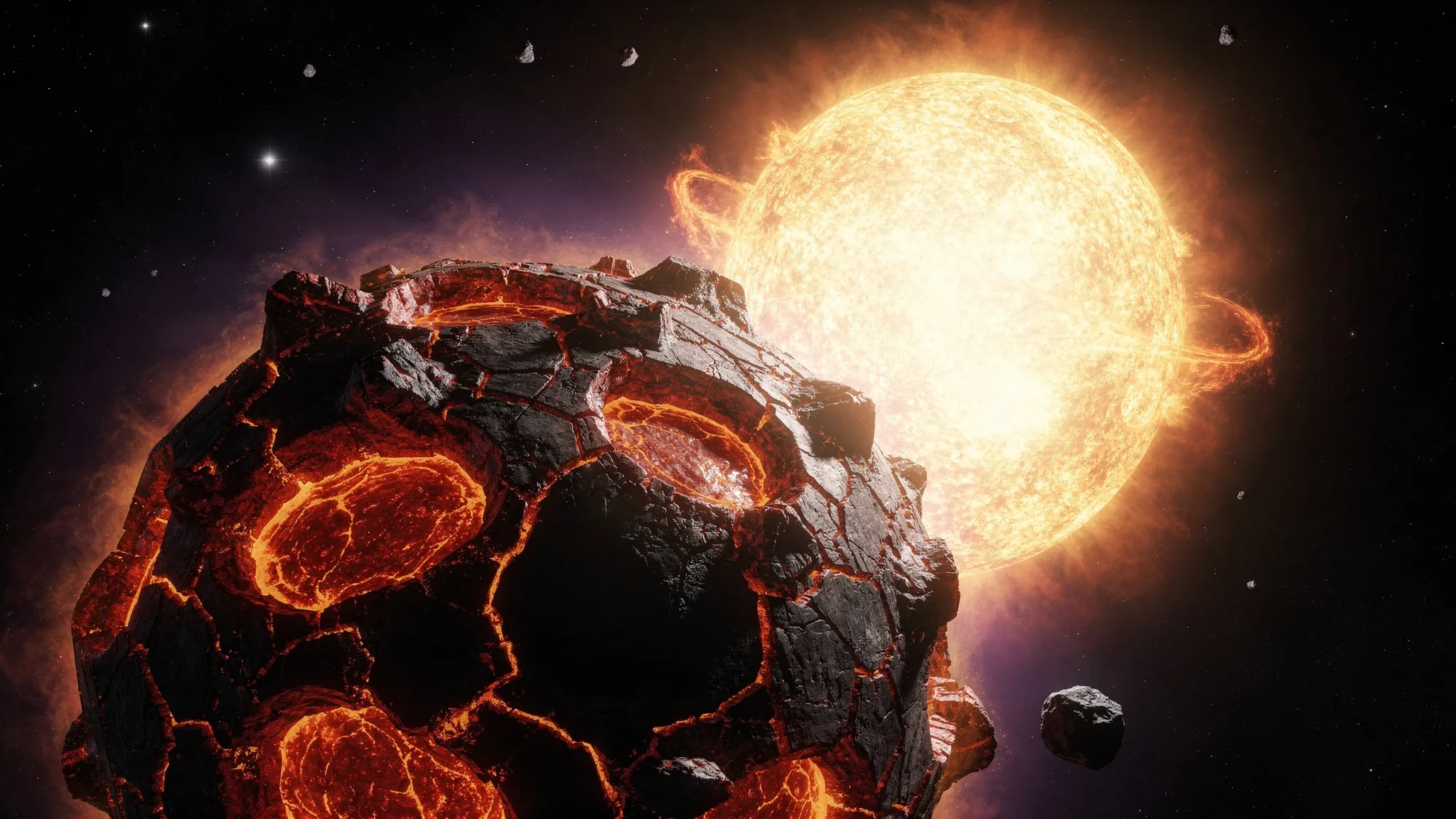
    A rocky world with a cracked dark crust and glowing pools of lava, close to a large blazing star, against black space.

    TOI-2431 b is a rocky planet one and a half times wider than Earth. It circles its star in just 5.4 hours. Its day side should be partly molten.

    Astronomers used Hubble to watch it pass behind its star. The total light dipped by just 69 parts per million. It is the first time Hubble has caught such an eclipse for a rocky planet.

    Combined with the TESS satellite, this gives a day side near 2,500 kelvins. That is almost the maximum possible, as if no heat reached the night side. Other lava worlds look cooler than expected.

    One catch: some of that light could be reflected starlight. If so, the planet is a bit cooler. The James Webb Space Telescope should settle it in the mid-infrared.

    Source: The First Hubble Detection of a Secondary Eclipse from a Rocky Exoplanet: the 5.4-hour planet TOI-2431 b, https://arxiv.org/abs/2609.31966

    Pré-publicaçãoObservação3 min de leitura
  7. Química

    THE PHOSPHORUS OF LIFE, BORN AMONG THE STARS

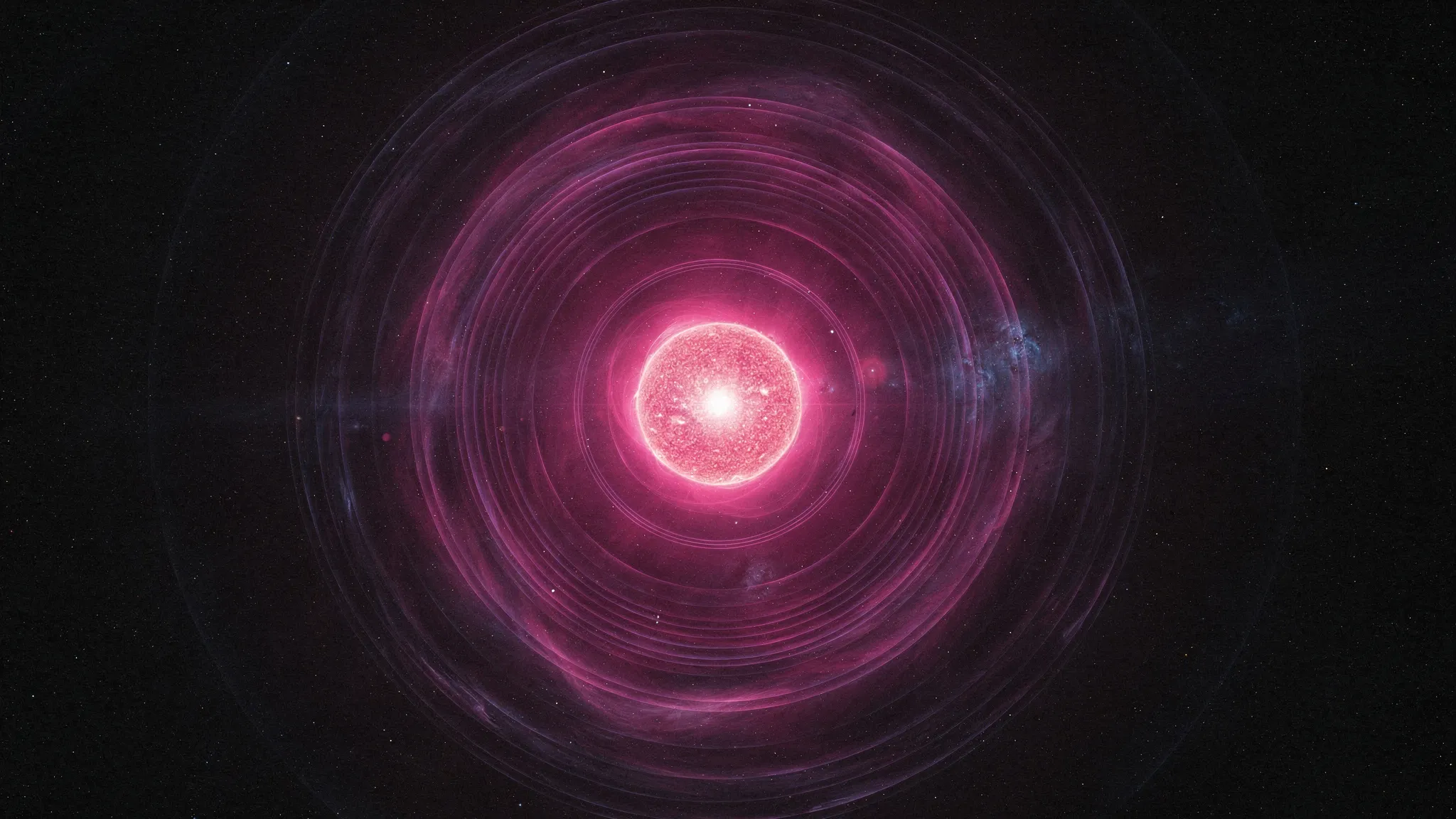
    An old star surrounded by concentric shells of glowing gas spreading outward into dark space, lit in magenta.

    Phosphorus is rare in the Universe, yet DNA, RNA and ATP all need it. How did it end up in living matter? Nobody knows for sure.

    In space, only three molecules linking phosphorus and carbon have been seen. Chemists suspected a key step: a phosphorus ion meeting acetylene, a simple carbon gas.

    A European team fired phosphorus ions at acetylene at the SOLEIL synchrotron near Paris. 99% of collisions made one product, HCCP+. The reaction also gets faster in the cold, unlike what databases assumed.

    In a model of an old carbon-rich star, this reaction becomes the main door to phosphorus ions. Its products could lead to the molecules already observed there. Next step: detect them with radio telescopes.

    Source: Synthesis of organo-phosphorous species in space: the reaction of P+ with C2H2, https://arxiv.org/abs/2609.33657

    Pré-publicaçãoExperimento3 min de leitura
  8. Matemática

    AN AI'S PROOF, REDRAWN FOR HUMANS

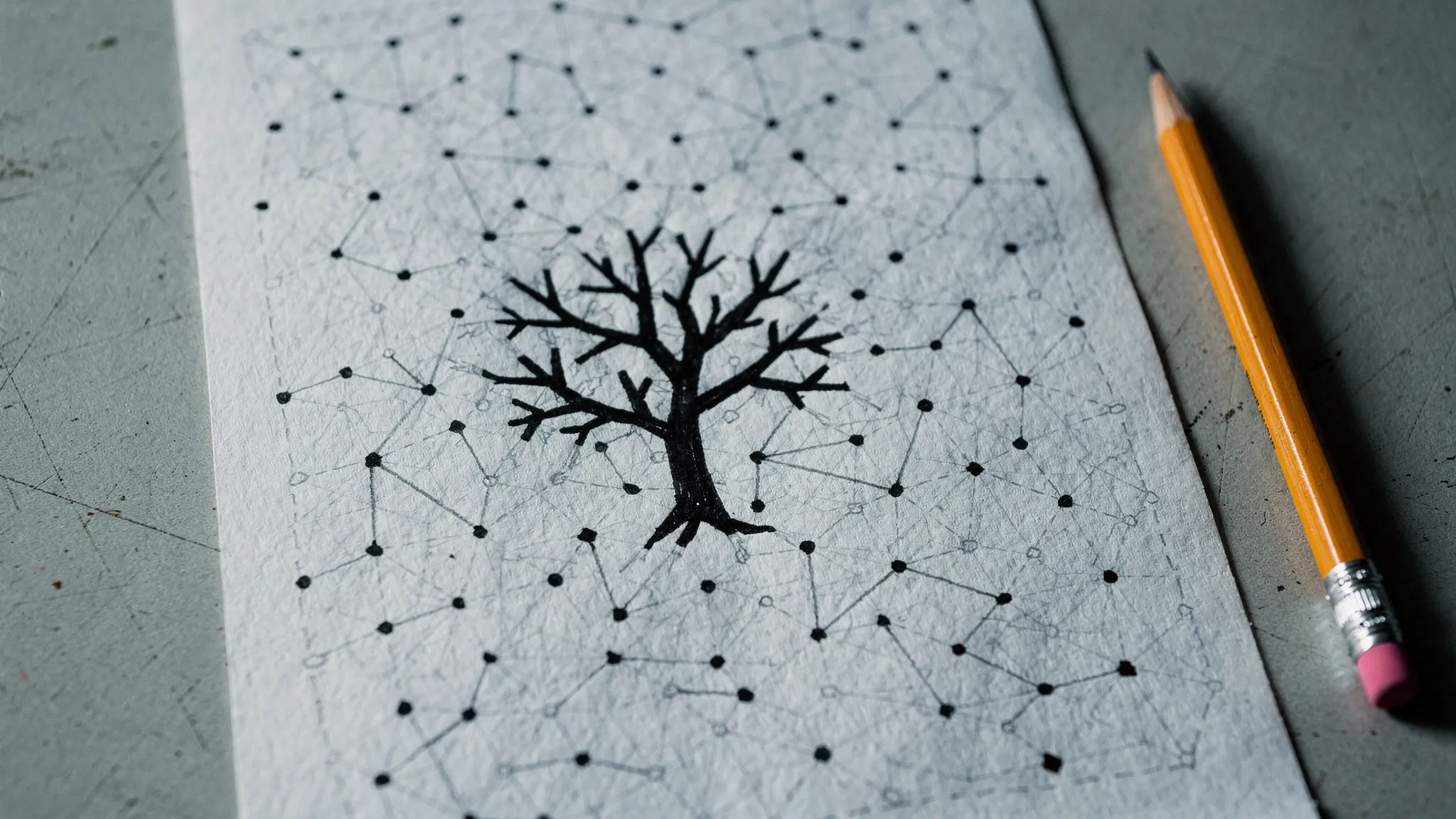
    A hand-drawn network of dots and lines on paper, a bold ink drawing of a branching tree at its centre, a pencil beside it, under soft light.

    Take a network of dots and lines. If each dot has enough links on average, does it contain every possible branching tree of a given size? Erdős and Sós raised this question in the early 1960s.

    In September 2026, a report credited a short proof of the full conjecture to a pre-release AI model, GPT-6 Astra. The proof was also checked by computer in the Lean language.

    Jay Cummings, a mathematician in California, now redraws it for humans. He reveals the network one dot at a time and counts the neighbours that arrive too early. Swapping dots shows the count can never be too large.

    His article is an exposition, not a new proof. It has 32 figures and worked examples. Rival expositions and extensions to other kinds of networks are already appearing.

    Source: The Erdős–Sós Conjecture: A Visual Exposition of the Proof Discovered by GPT-6 Astra, https://arxiv.org/abs/2609.32011

    Pré-publicaçãoTeoria4 min de leitura
  9. Física

    A DAM BREAKS IN A QUANTUM FLUID

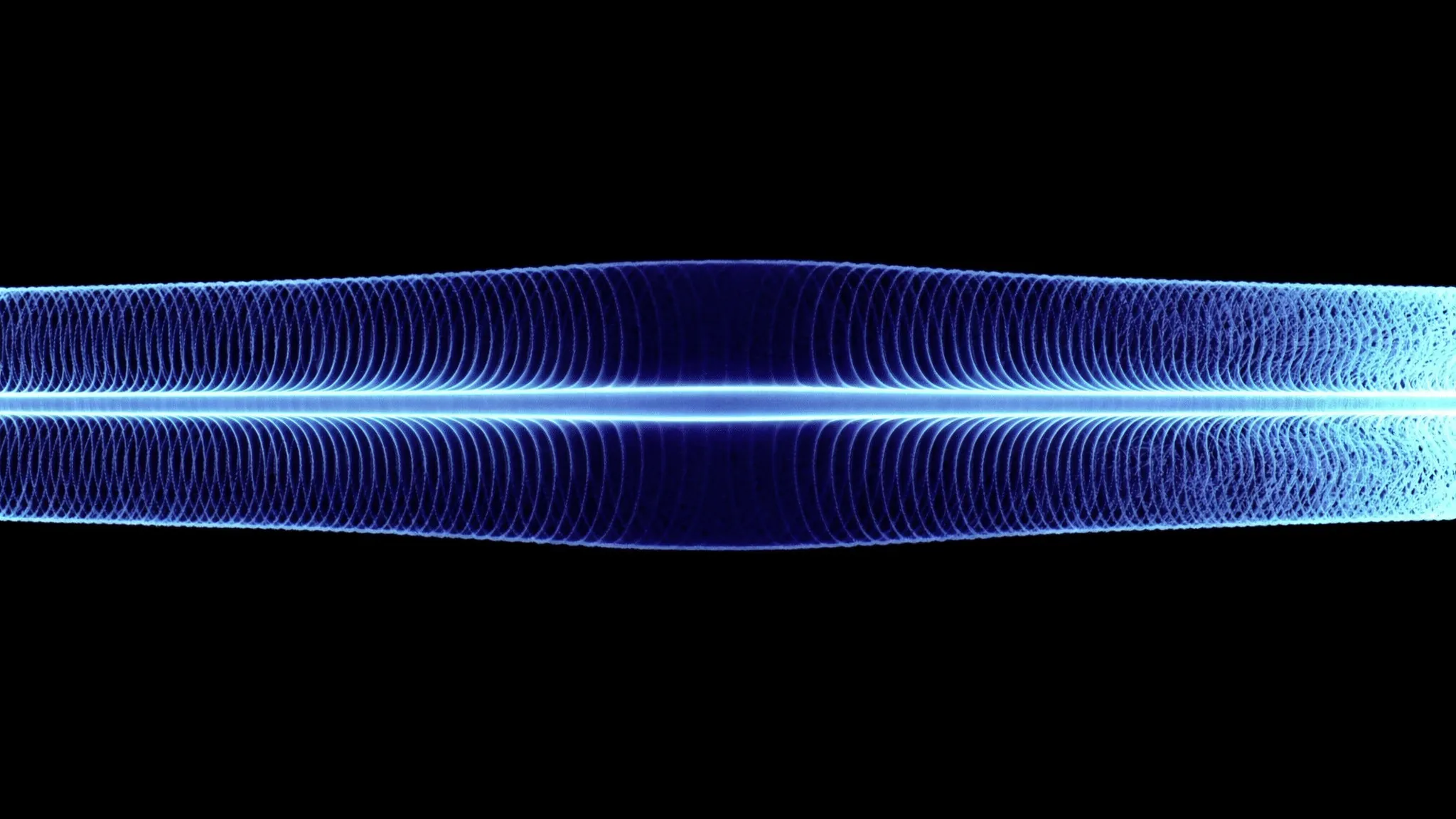
    A thin elongated cloud of ultracold atoms seen from the side, fine regular ripples along its length, brighter toward the right, in deep blue on black.

    Cool atoms to almost absolute zero and they merge into a single quantum wave, a superfluid. Now trap them in a line and add a wall. One side is denser than the other.

    Pull the wall away suddenly. Physicists simulated what happens next. Two trains of ripples rush out in opposite directions, like the tidal bores that run up some rivers.

    Between the two trains lies a calm zone where no sound travels. Its ray pattern matches a double rainbow, dark band included. The ripples grow longer only as time to the power one third.

    With a big enough density difference, the flow outruns the speed of sound. Sound can no longer travel back upstream: an analogue of a black hole's horizon forms. No experiment has seen these ripples yet, but the team suggests tricks to make them visible.

    Source: Quantum undular bores, rainbows, and event horizons in superfluid dam breaks, https://arxiv.org/abs/2609.32232

    Pré-publicaçãoTeoria4 min de leitura
  10. Computação e IA

    IS SCIENCE STARTING TO REPEAT ITSELF?

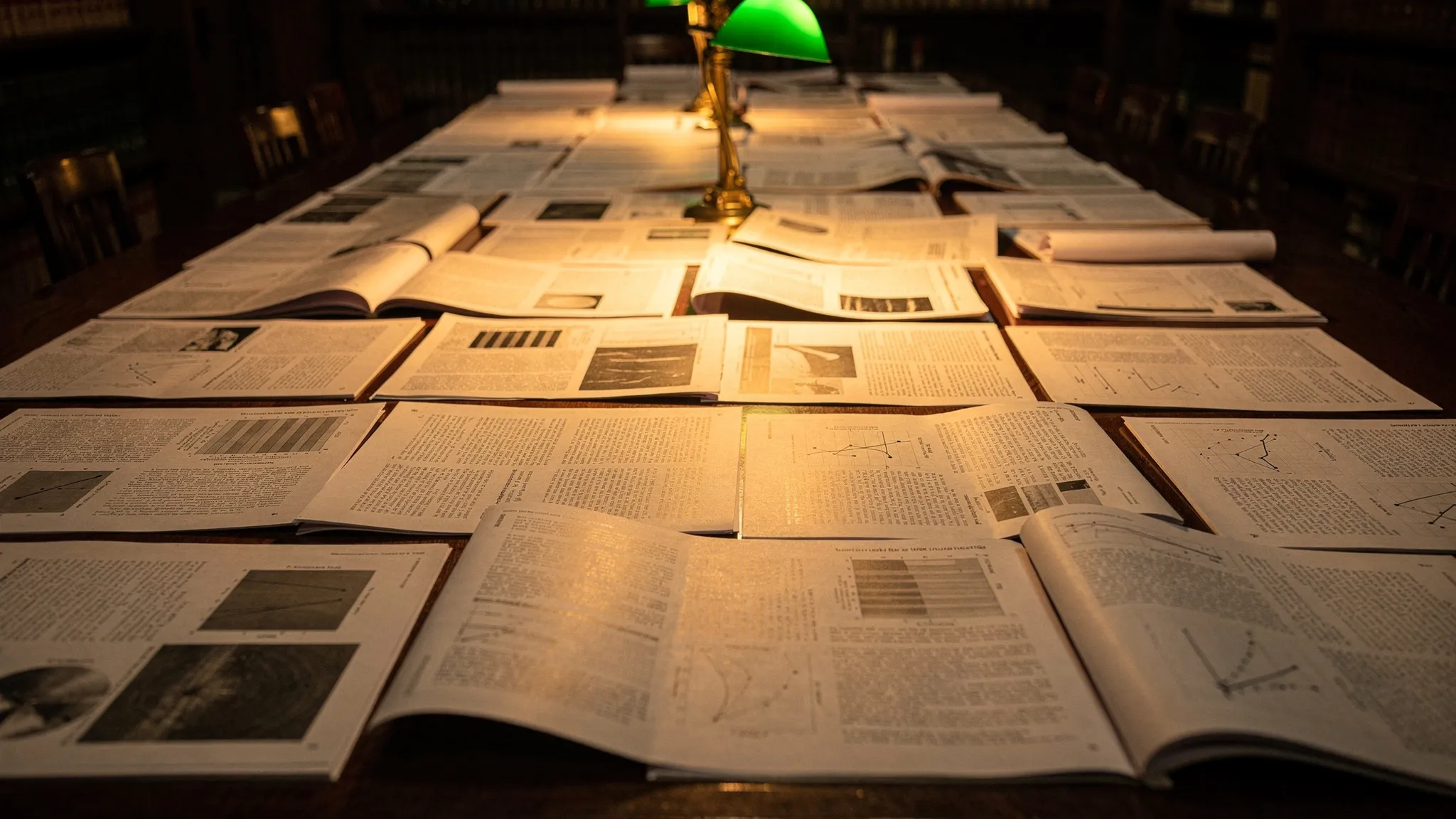
    Many printed scientific articles laid out in rows on a long library table, their pages showing similar layouts of text and graphs, under amber lamp light.

    Science publishes more every year. But are papers still saying something new? Two MIT mathematicians checked one measurable part of originality: how much a paper's text echoes recent work.

    They used language models to compare 26,000 full papers from eight fields with earlier work. Copy-paste was excluded: they looked for passages that say the same thing in different words.

    The share of echoing text was stable until 2020. Then it more than tripled by 2025. A quarter of 2025 papers contain at least one such passage. Fewer than one match in ten is cited.

    The rise coincides with AI writing tools, but the study does not prove they caused it. Similar text is not fraud either. The authors warn against turning originality into a score to game.

    Source: More of the same? Are scientific papers losing originality?, https://arxiv.org/abs/2609.32963

    Pré-publicaçãoAnálise de dados3 min de leitura
  11. Computação e IA

    AN ALGORITHM CHOOSES WHERE REFUGEES START

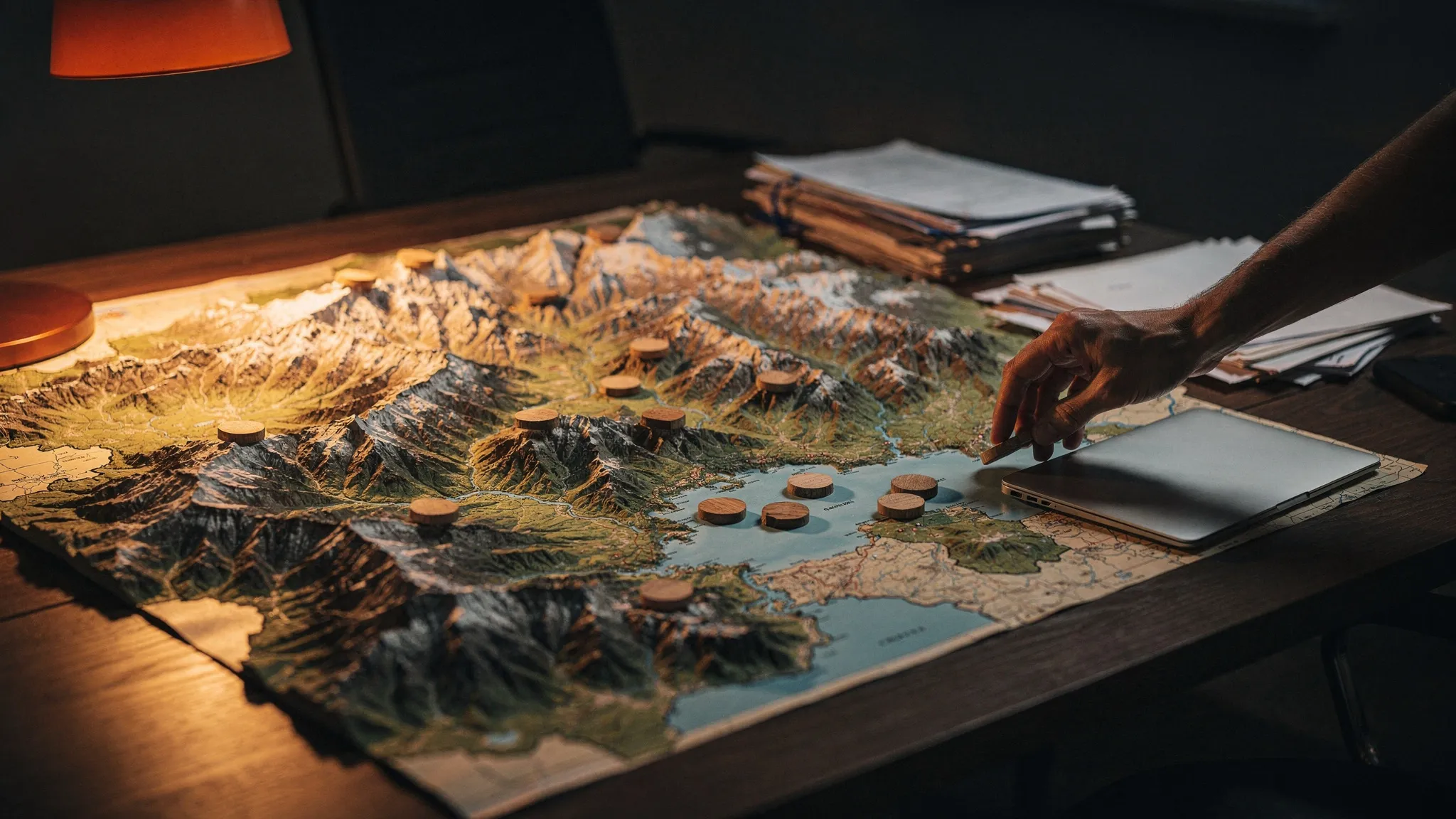
    A relief map of Switzerland on a desk, small markers placed on several cantons, a placement officer's hand beside a laptop, in amber light.

    Where a refugee is first housed shapes their whole future. In Switzerland, officials assign each case to one of 26 cantons, mostly by quota.

    From 2020 to 2023, about 2,000 refugee cases were split by lottery. Half got a canton picked by an algorithm to maximise employment. The other half got the usual random pick. Neither officials nor refugees knew which was which.

    Over three years, the algorithm group worked about 10% more months. After the Covid years, the gain reached about 17%. Jobs also lasted longer.

    Officials kept the final say and followed the advice 97% of the time. The tool costs little: about 50 francs per adult. The authors, who designed it, call their trial a cautious test. It does not replace language courses.

    Source: AI-based matching improves refugee employment in a double-blind randomized trial, https://arxiv.org/abs/2609.35448

    Pré-publicaçãoExperimento4 min de leitura
Legal notice