Edición del 28 de septiembre de 2026

  1. Física

    A STRANGE HIT IN A DARK MATTER TRAP

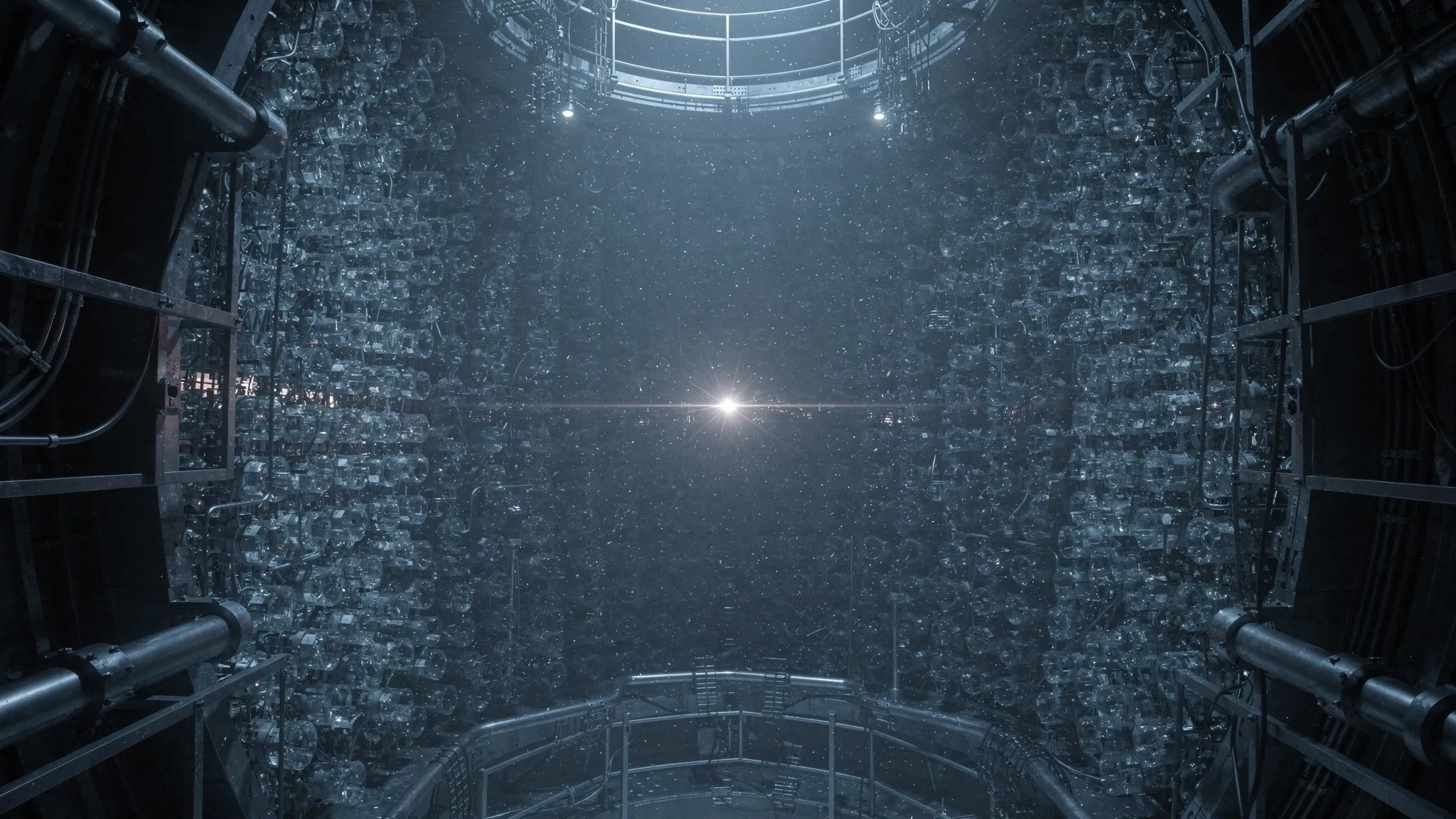
    Inside a large cylindrical detector lined with rows of photomultiplier tubes, a single tiny flash of light in the dark.

    Deep underground, the LZ detector waits for dark matter to bump into a xenon atom. It recently recorded one single, unexplained hit, at 248 kiloelectronvolts. Its significance is intriguing, not a discovery.

    The blow was far too strong for ordinary dark matter. Unless it weighs over 74 times a proton — an option already largely ruled out.

    One idea: tiny black holes born after the Big Bang, slowly evaporating. They would spray out very fast, light particles. A physicist in India ran the numbers.

    Verdict: impossible. Such black holes would also cause many small hits, and LZ saw none. Bonus: at most a millionth of dark matter can be this kind of black hole.

    Source: Limits on Primordial Black Hole Evaporation from LUX-ZEPLIN, https://arxiv.org/abs/2609.29462
    PrepublicaciónTeoría3 min de lectura
  2. Espacio y astronomía

    THE MOST POWERFUL RADIO GALAXY EVER FOUND

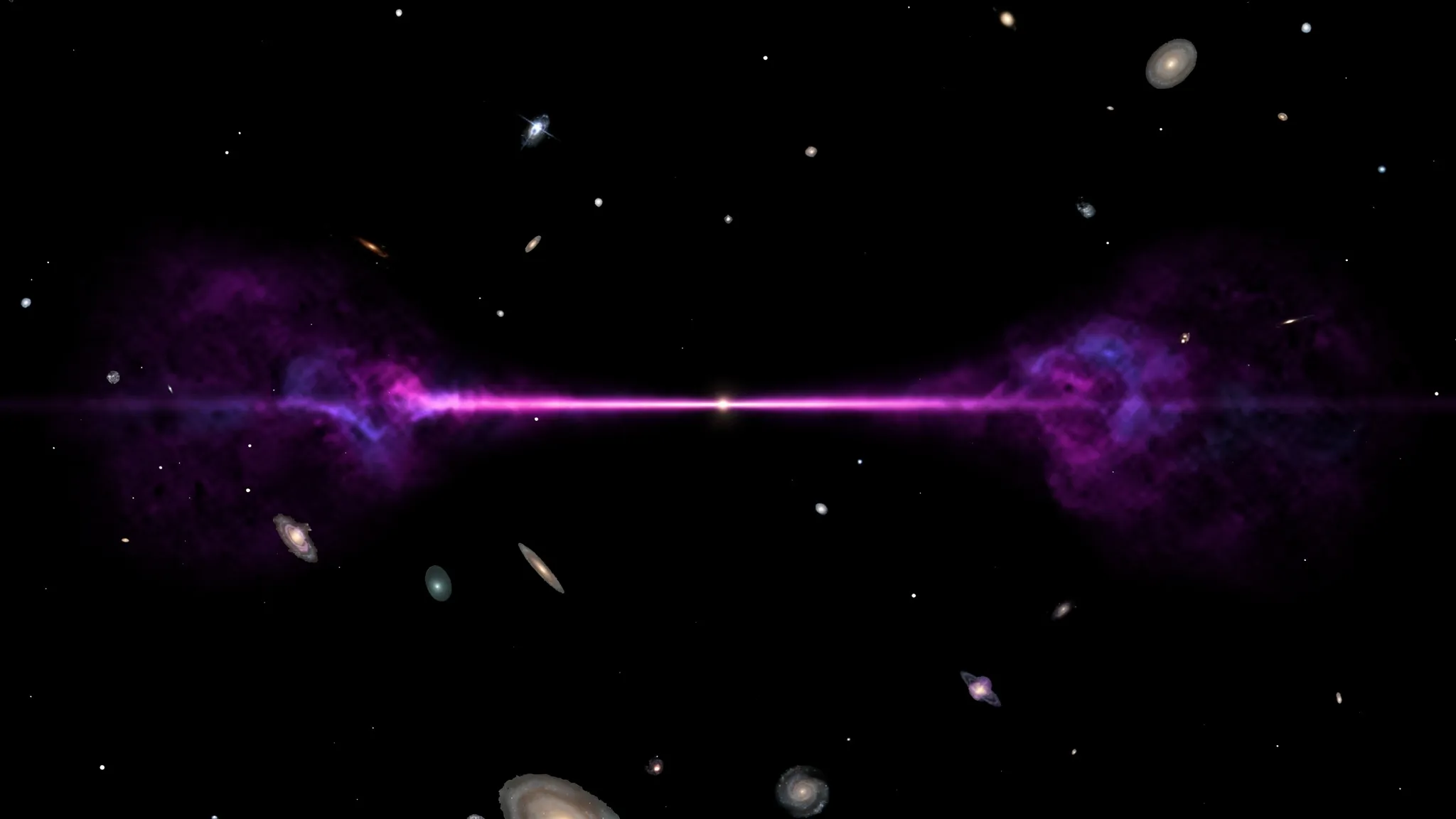
    False-colour radio image of a distant galaxy: a bright core with two long straight violet jets ending in wide diffuse lobes.

    At the heart of some galaxies, a giant black hole shoots jets of matter across space. Seen by radio telescopes, these are radio galaxies.

    An Italian-led team hunted for the most distant ones. Using the VLT in Chile, they confirmed one: TXS 2354+015, at redshift 4.946.

    At 500 megahertz, it emits 6.2 × 10²⁹ watts per hertz. That is about twice the previous record. It is now the most powerful radio galaxy known.

    It is also the second most distant ever found. Most of these monsters hide behind dust. Many more may be waiting. The team's method, based on how early galaxies vanish in some colours, finds them where the classic radio test fails.

    Source: The quest for high-redshift radio galaxies II. Discovery of the most powerful known radio galaxy at z=4.946, https://arxiv.org/abs/2609.28632

    PrepublicaciónObservación3 min de lectura
  3. Espacio y astronomía

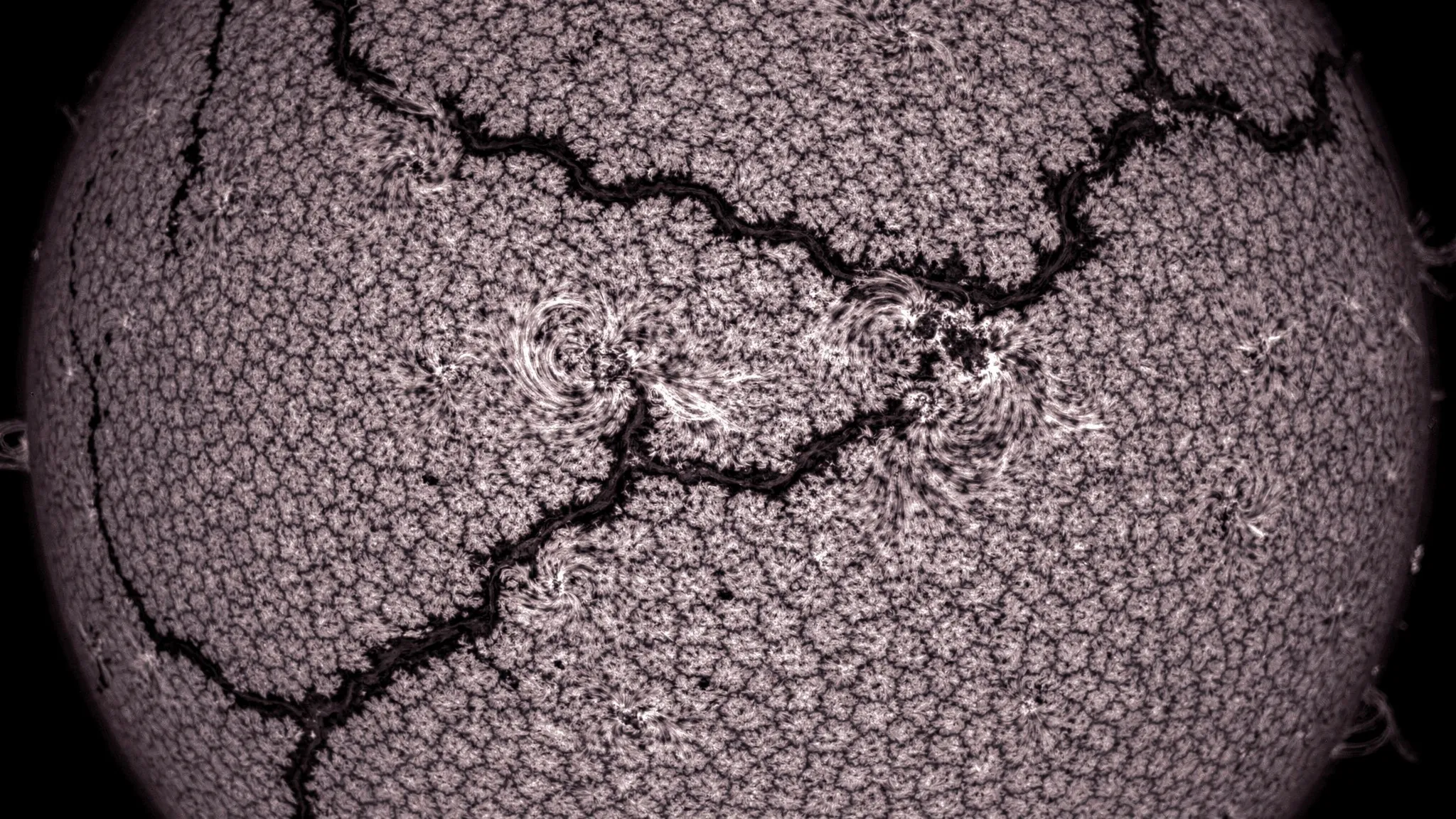
    TINY WHIRLPOOLS ON THE SUN

    Monochrome image of the Sun's disc covered in granulation, crossed by dark filament-like lines.

    The surface of the Sun boils. Cells of hot gas rise, cool and sink again. Simulations predicted tiny whirlpools in between. No telescope could see them. The sharpest earlier views reached about 150 kilometres.

    Until DKIST, the 4-metre solar telescope in Hawaii. It filmed a small patch of the Sun for 3.2 minutes, 740 images per second.

    Result: 201 whirlpools detected. Their typical width: 38.6 kilometres. More than 99% are under 50. Each turns about once every 37 seconds.

    These whirlpools could carry energy upward and help heat the Sun's atmosphere. The team now wants to catch them higher up.

    Source: DKIST unveils MHD-predicted sub-50 km photospheric vortices, https://arxiv.org/abs/2609.30051

    PrepublicaciónObservación2 min de lectura
  4. Espacio y astronomía

    40 MILLONES DE AGUJEROS NEGROS VAGAN POR NUESTRA GALAXIA

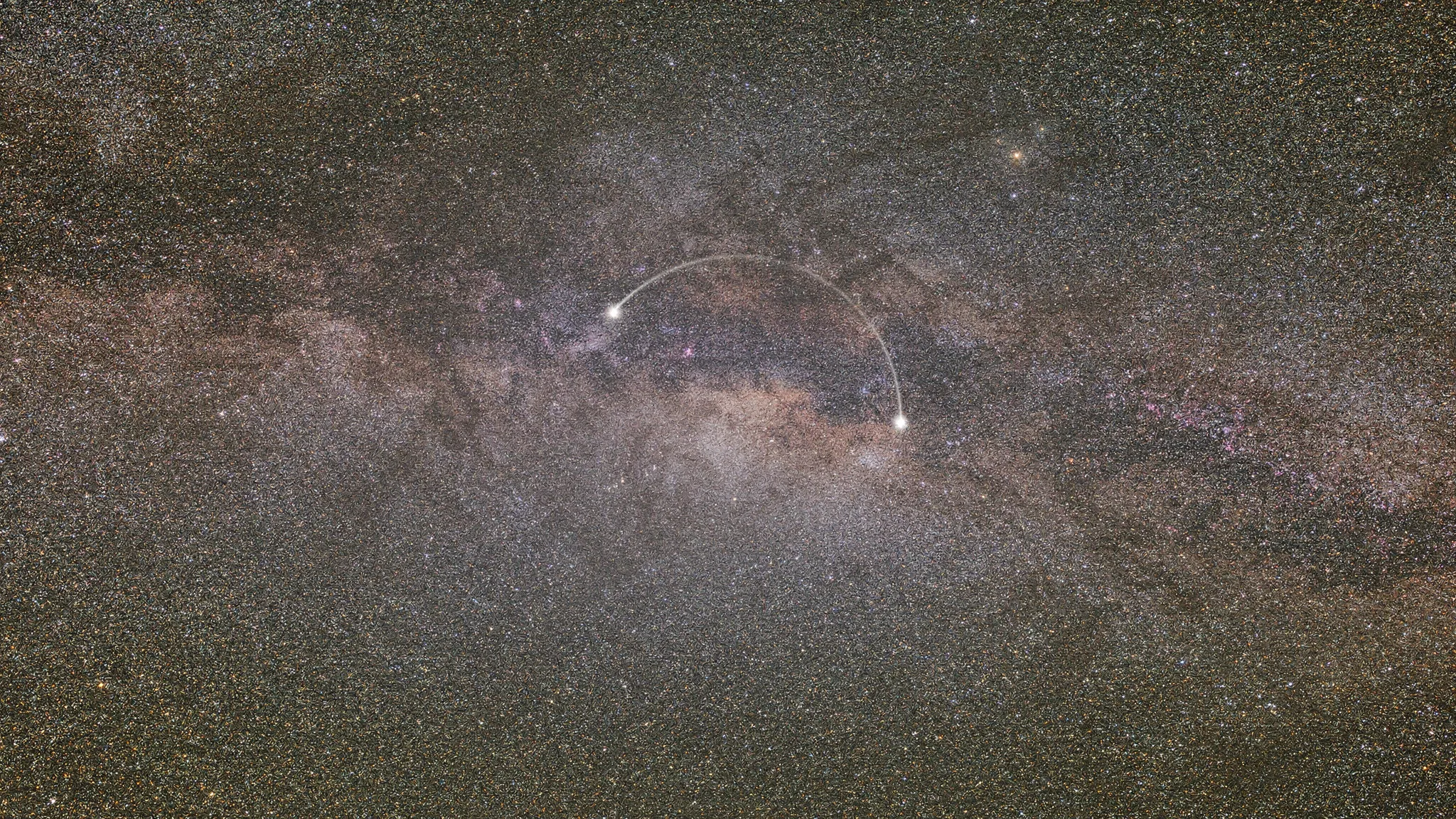
    Un denso campo de estrellas de la Vía Láctea, con un fino arco brillante que une dos estrellas cerca del centro.

    Cuando una estrella masiva muere, puede dejar un agujero negro. La mayoría vagan solos por la Galaxia. Son casi imposibles de ver. En nuestra Galaxia solo se conocen unas dos docenas de agujeros negros, casi todos con una estrella compañera.

    Un equipo de la Universidad de Nankín construyó una simulación de toda la historia de la Vía Láctea: estrellas, parejas de estrellas, explosiones y órbitas.

    Resultado: unos 40 millones de agujeros negros solitarios. Unos 80 000 se encuentran a menos de 1 kiloparsec del Sol, es decir, unos 3300 años luz. Hasta ahora solo se ha confirmado uno.

    ¿Cómo encontrar los demás? Curvan la luz de las estrellas que tienen detrás. El futuro telescopio espacial Roman podría captar cientos de estos eventos.

    Fuente: A Census of Stellar-mass Black Holes in the Milky Way with POPKIN. I. Isolated Black Holes, https://arxiv.org/abs/2609.29211

    PrepublicaciónSimulación3 min de lectura
  5. Informática e IA

    LOS RESÚMENES DE LA IA PUEDEN REESCRIBIR TU MEMORIA

    Una persona lee una hoja impresa bajo una lámpara de escritorio de noche, junto a un portátil que muestra una escena callejera en pausa con un coche rojo.

    La IA ya redacta informes policiales a partir de las grabaciones de cámaras corporales. Se supone que un humano detecta sus errores. ¿Y si los errores cambian al humano?

    Unos investigadores pidieron a ChatGPT y Gemini que resumieran un vídeo de 25 segundos en el que un coche atropella a un peatón. 19 de los 20 resúmenes omitieron el propio choque.

    Después, 328 personas vieron el vídeo. Un día más tarde leyeron un resumen que citaba la señal de tráfico equivocada. Solo el 44,8 % seguía recordando la correcta, frente al 83,6 % con un resumen correcto.

    Creer que lo había escrito un humano no cambió nada. Tampoco desconfiar de la IA. Saber que la IA se equivoca no protegió la memoria. Los autores cuestionan el uso de resúmenes de IA en la labor policial.

    Fuente: AI-Enabled Human Memory Manipulation: Misleading AI-Generated Summaries Distort Human Memory, https://arxiv.org/abs/2609.28820

    PrepublicaciónExperimento3 min de lectura
  6. Química

    AN AI FINDS A WAY AROUND IRIDIUM

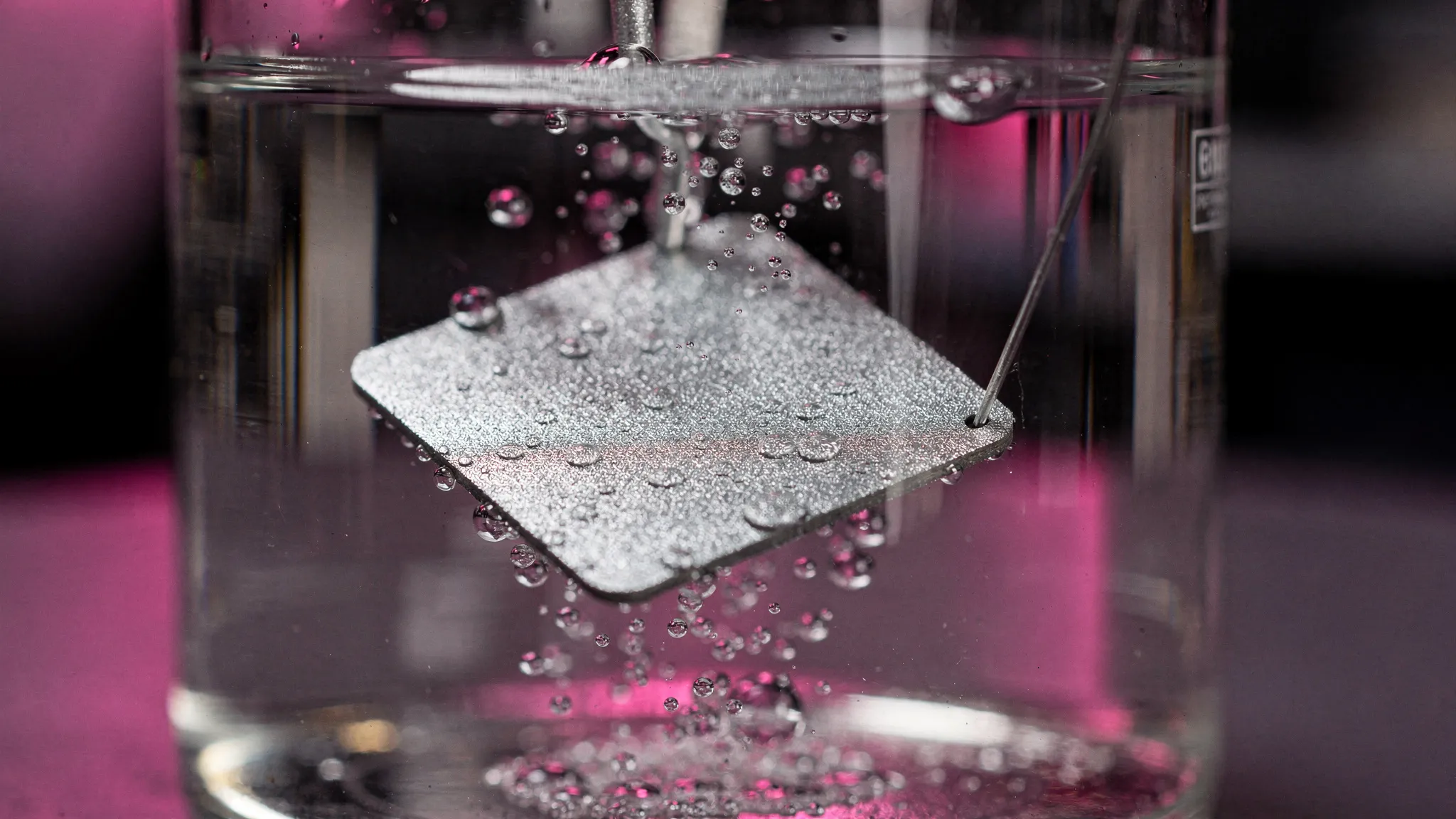
    Macro photograph of a small silvery coated wafer in clear acid, with tiny bubbles rising from its surface, in magenta light.

    To make green hydrogen, we split water. One key step only works with iridium or ruthenium. These metals are rare, with fragile supply chains.

    A US company built a robot lab steered by AI. It tested 2,942 materials made from 26 elements, about 240 per week. Humans only move the samples.

    Surprise: the winners are rich in palladium, a family nobody expected. The best one lasted 1,000 hours and kept 96% of its palladium.

    Palladium is also precious, but produced more than ten times more than iridium. A chatbot alone did worse than random at this search.

    Source: AI-guided high-throughput discovery of iridium- and ruthenium-free palladium-oxide catalysts for durable acidic oxygen evolution, https://arxiv.org/abs/2609.30133

    PrepublicaciónExperimento3 min de lectura
  7. Física

    ONE SHEET, MANY ORIGAMI

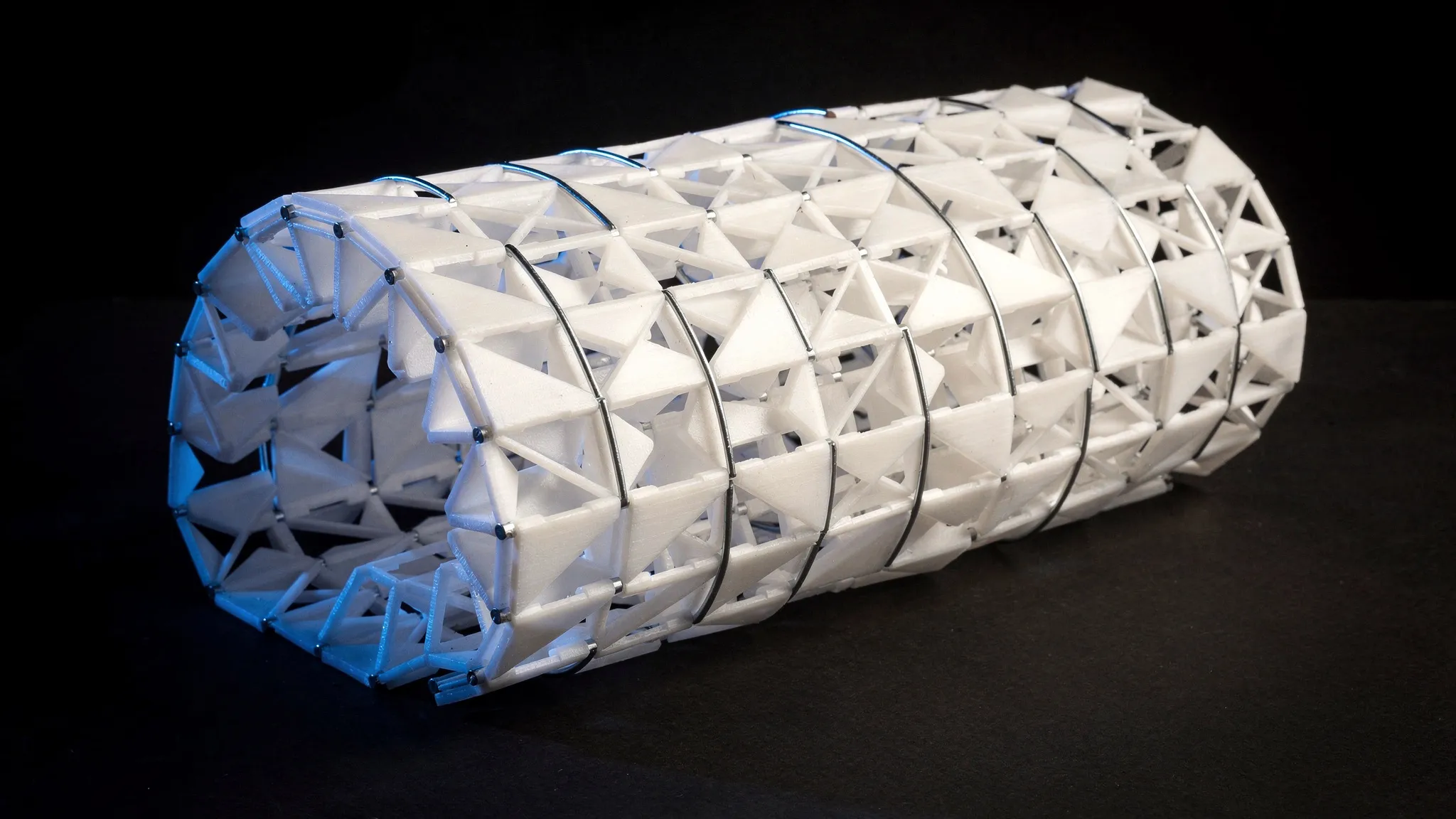
    A sheet of small white triangular panels folded into a cylinder, thin steel strips arched across its hinges, lit in blue.

    Crease a sheet of paper, and it remembers that fold forever. So one origami usually makes only one shape. Tiny motors at every hinge are one known fix.

    A team at Harvard slipped a steel strip, 0.05 mm thick, across each hinge. Squeezed, it bows up or down. Press it, and it flips.

    Each flip decides if a fold goes up or down. One sheet folds into a bird or a whale. Another into a box or a boat. A chain spells ORIGAMI.

    Some sheets even reprogram themselves when you fold their edges. One unfolds on its own when pulled. Another counts how often it has been squeezed.

    Source: Reprogrammable origami through bistable buckled hinges, https://arxiv.org/abs/2609.28790

    PrepublicaciónExperimento3 min de lectura
  8. Física

    A CROWDED CRYSTAL THAT STAYS QUANTUM

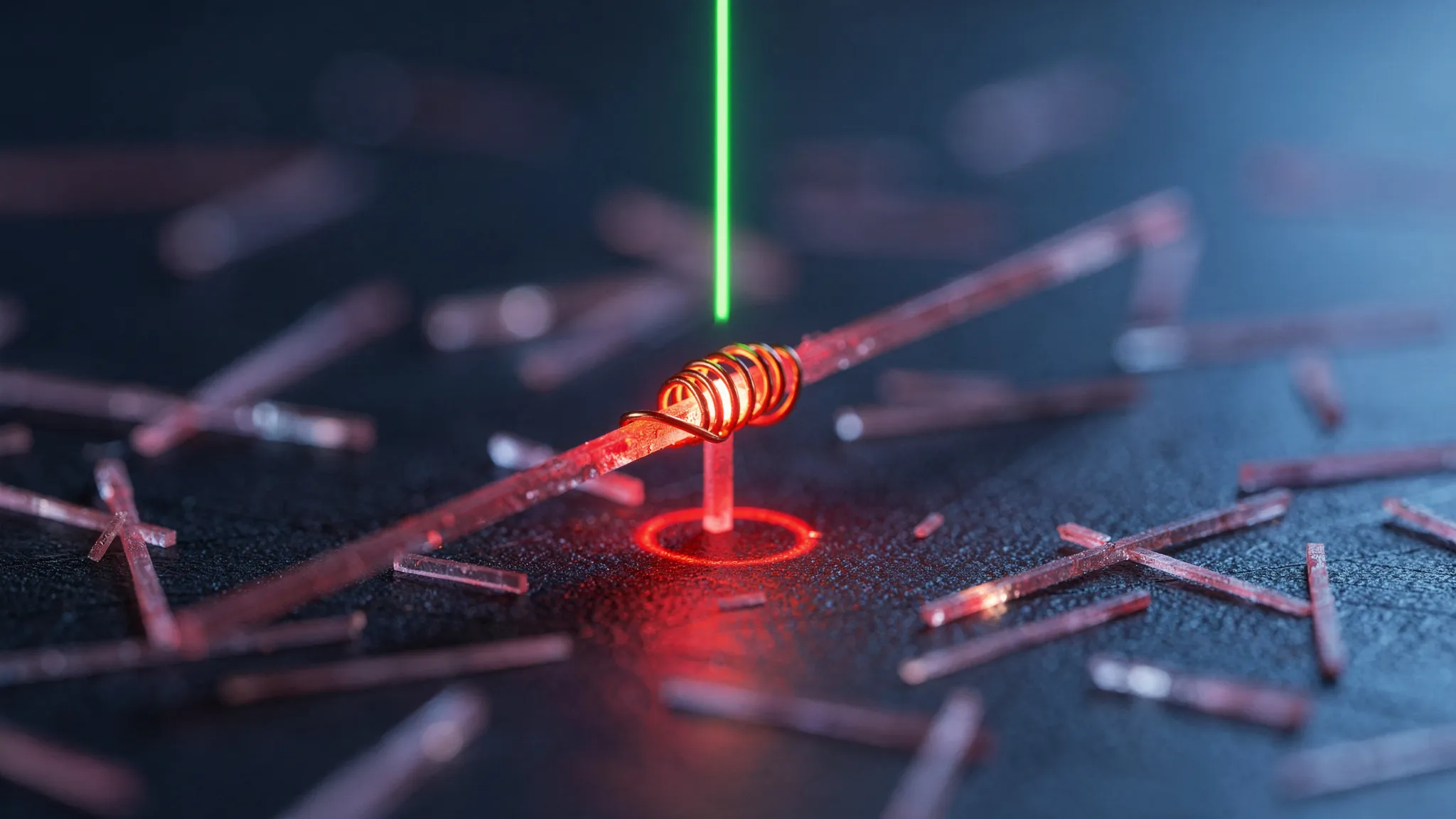
    Macro photograph of thin pink needle-shaped crystals on a dark surface; one needle glows red where a green laser beam hits it, inside a small copper coil.

    Quantum sensors use tiny magnets called spins to measure magnetic fields. The more spins you pack in, the more sensitive the sensor. In theory.

    In practice, crowded spins disturb each other. Their quantum state collapses too fast. So diamond sensors keep them rare, a few to tens of parts per million.

    A Berkeley-led team grew pink crystal needles where one molecule in three is a sensor. That is over 100 times denser than the benchmarks.

    At room temperature, the spins stay coherent for about a microsecond. The secret: a neighbour molecule that blocks their energy from hopping around. Next step: turning these needles into real magnetic sensors.

    Source: Dense pentacene cocrystal demonstrates room-temperature coherent control, https://arxiv.org/abs/2609.28912

    PrepublicaciónExperimento3 min de lectura
  9. Tierra y clima

    LOS DRONES DE REPARTO CAMBIARÁN DÓNDE HAY RUIDO EN LAS CIUDADES

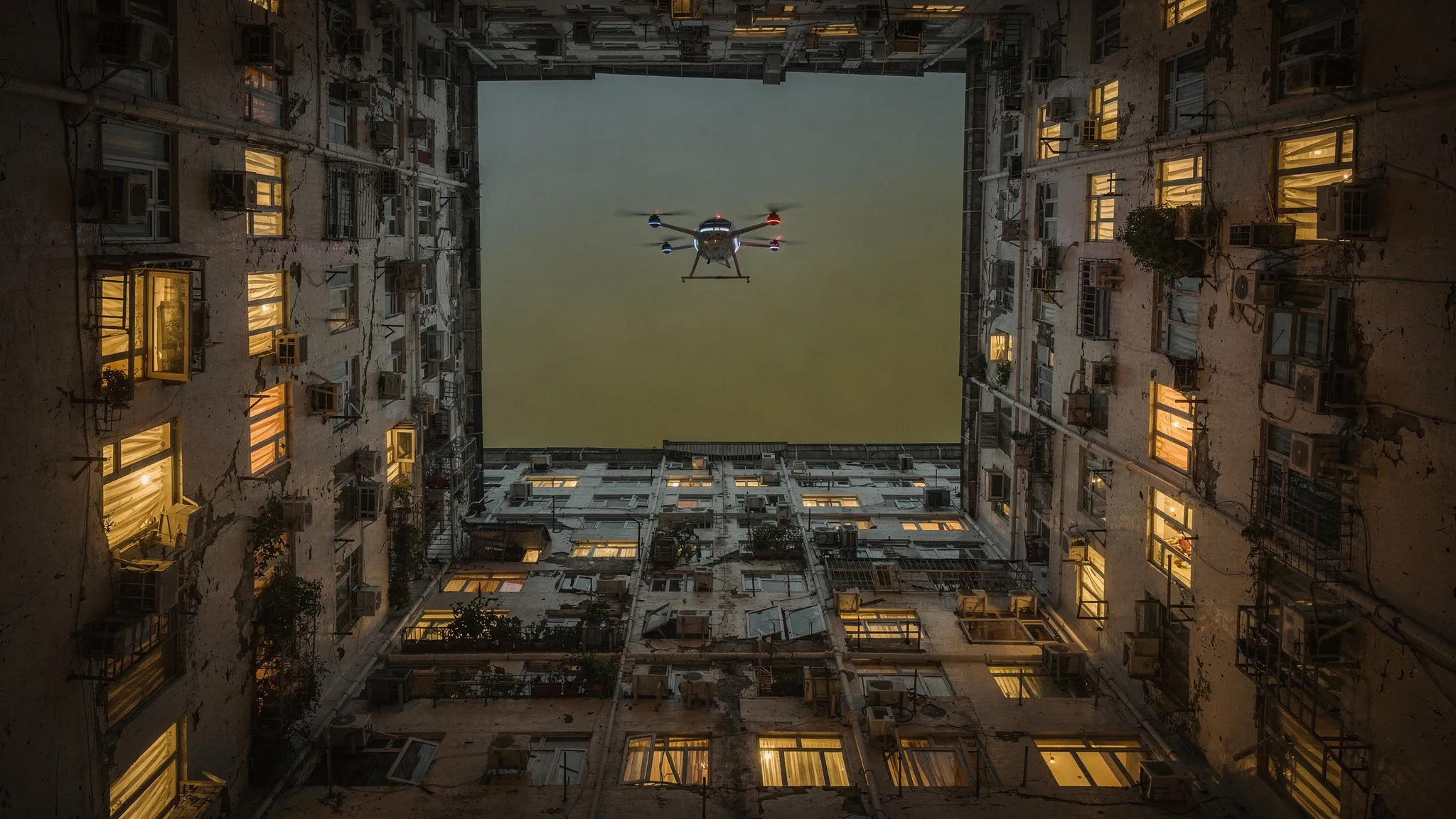
    Vista al atardecer desde el fondo de un patio cerrado entre altos edificios de viviendas, mirando hacia un dron multirrotor que cruza el cuadrado de cielo.

    Los drones de reparto y los taxis voladores llegan a ciudades de todo el mundo. Su ruido viene de arriba. Las normas actuales sobre ruido se escribieron para carreteras y aeropuertos. Y, al mismo volumen, los drones parecen molestar más que el tráfico.

    Investigadores de Londres simularon vuelos idénticos sobre diez ciudades, de Tokio a Nairobi. Misma ruta, a 100 metros de altura, mismo tráfico.

    En las calles concurridas, el cambio fue pequeño: el tráfico ya lo tapa. En los tranquilos patios interiores de Londres y Nueva York, el ruido subió más de 20 decibelios.

    Los pisos altos pueden ser más ruidosos que los bajos, cerca de la altura de vuelo. El equipo afirma que las rutas futuras deberán evaluarse en 3D.

    Fuente: Low-altitude aircraft will reshape noise exposure across global cities, https://arxiv.org/abs/2609.29763

    PrepublicaciónSimulación3 min de lectura
  10. Matemáticas

    ¿CUÁNTAS CARTAS HASTA EL PRIMER AS?

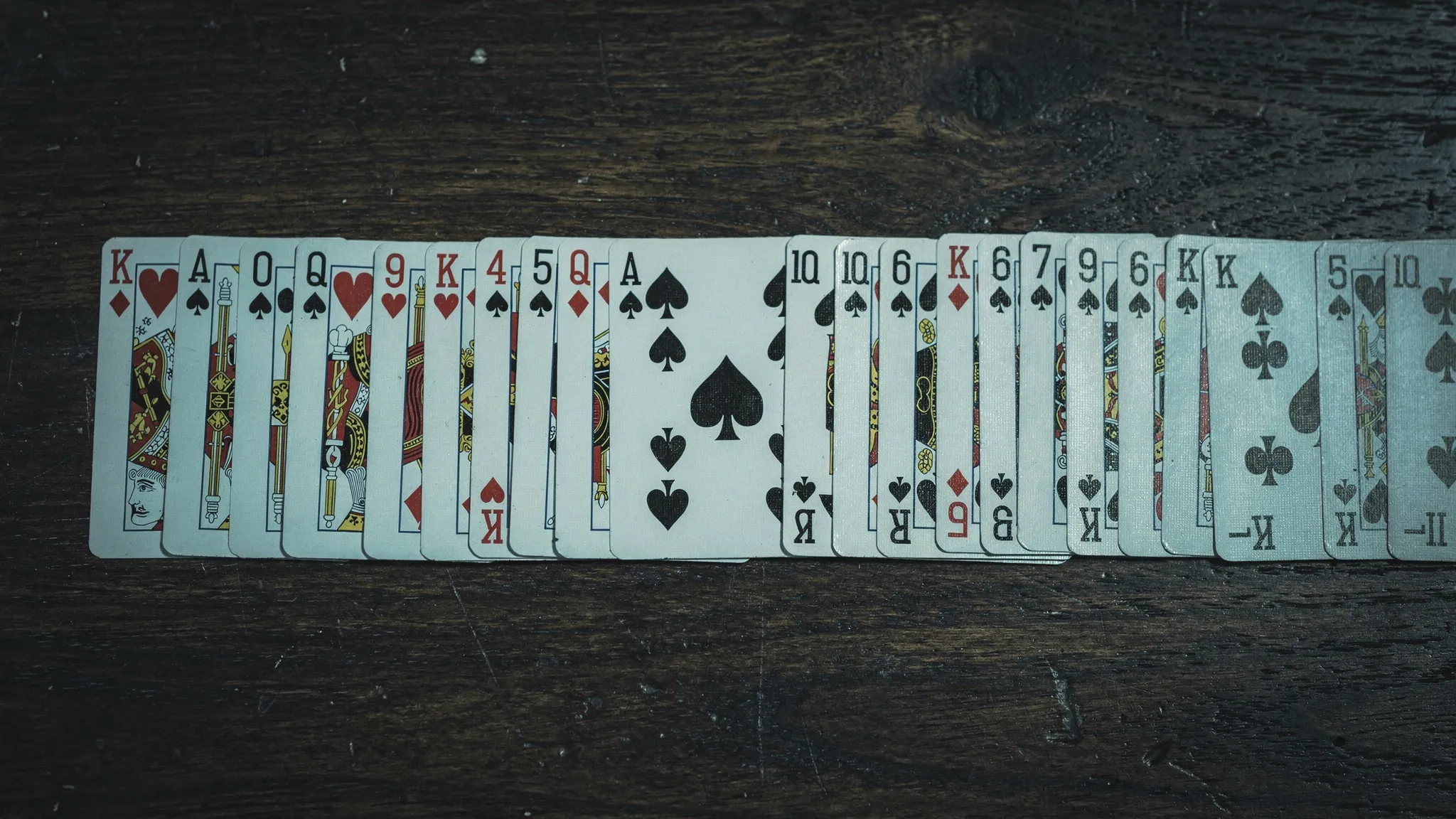
    Naipes boca arriba en una larga fila sobre una mesa de madera oscura, con un as de picas entre las primeras cartas.

    Baraja un mazo de 52 cartas. Dales la vuelta una a una hasta que salga el primer as. ¿Cuántas cartas hacen falta, de media? Haz tu apuesta. Es un acertijo de una revista noruega de estadística.

    La respuesta: 10,6. Un estadístico noruego lo demuestra de varias maneras. La fórmula general es sencilla: el número de cartas más uno, dividido entre el número de ases más uno.

    Mejor aún: de media, los cuatro ases dividen el mazo en cinco partes iguales. Cada hueco entre ases se comporta como el primero.

    Dale la vuelta a la pregunta y se vuelve útil. Si, en una sala de 1000 personas, el quinto zurdo es la persona número 50 con la que te cruzas, hay unos 85.

    Fuente: How many cards, until the first ace: variations, extensions, lachrymae, confidence, Dirichlets, https://arxiv.org/abs/2609.29596

    PrepublicaciónTeoría3 min de lectura
Legal notice