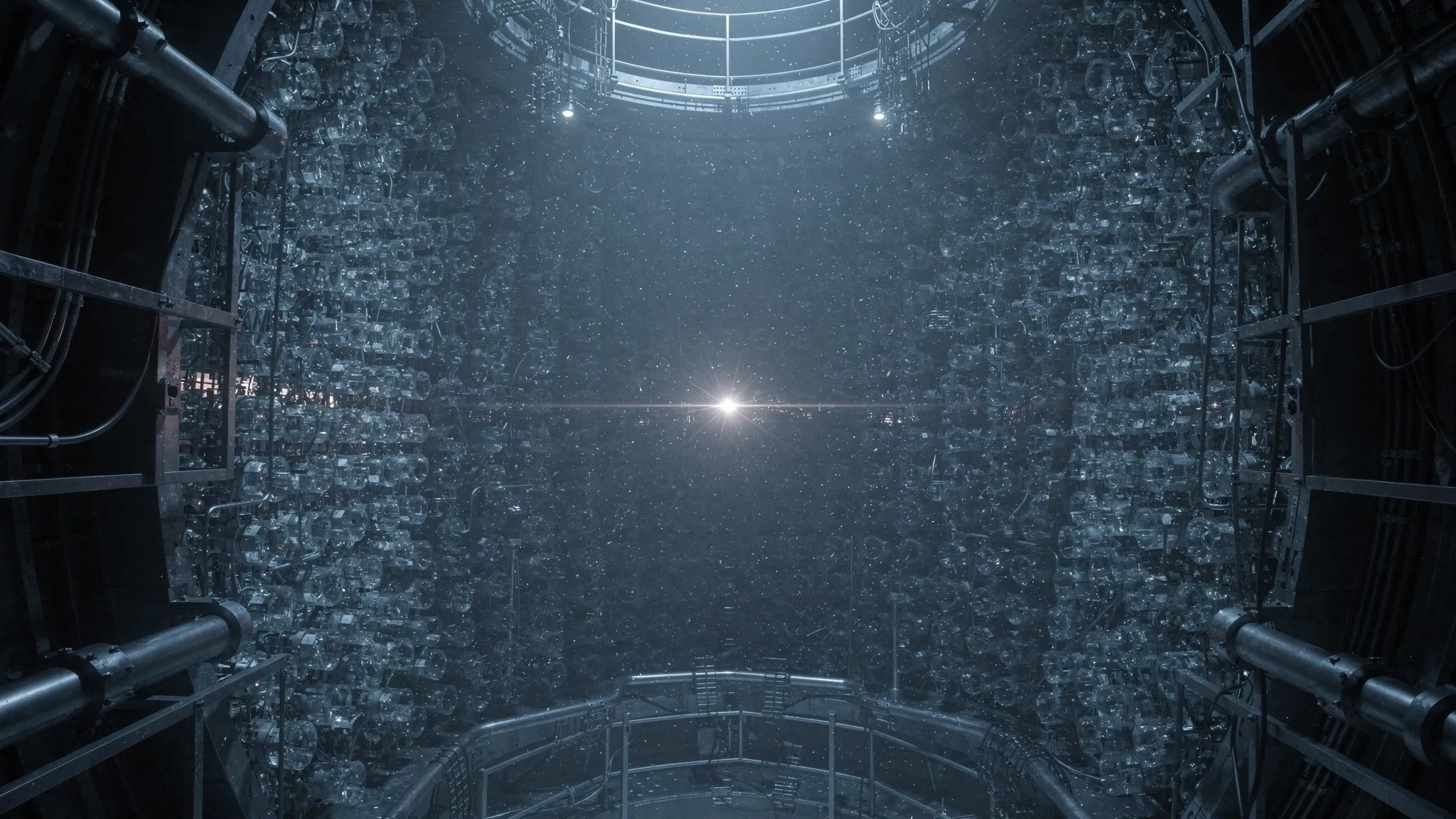
Deep underground, the LZ detector waits for dark matter to bump into a xenon atom. It recently recorded one single, unexplained hit, at 248 kiloelectronvolts. Its significance is intriguing, not a discovery.
The blow was far too strong for ordinary dark matter. Unless it weighs over 74 times a proton — an option already largely ruled out.
One idea: tiny black holes born after the Big Bang, slowly evaporating. They would spray out very fast, light particles. A physicist in India ran the numbers.
Verdict: impossible. Such black holes would also cause many small hits, and LZ saw none. Bonus: at most a millionth of dark matter can be this kind of black hole.
Source: Limits on Primordial Black Hole Evaporation from LUX-ZEPLIN, https://arxiv.org/abs/2609.29462