Henüz çevrilmedi: İngilizce özgün metin.
A DIGITAL TWIN FOR EACH IMPLANTED EAR
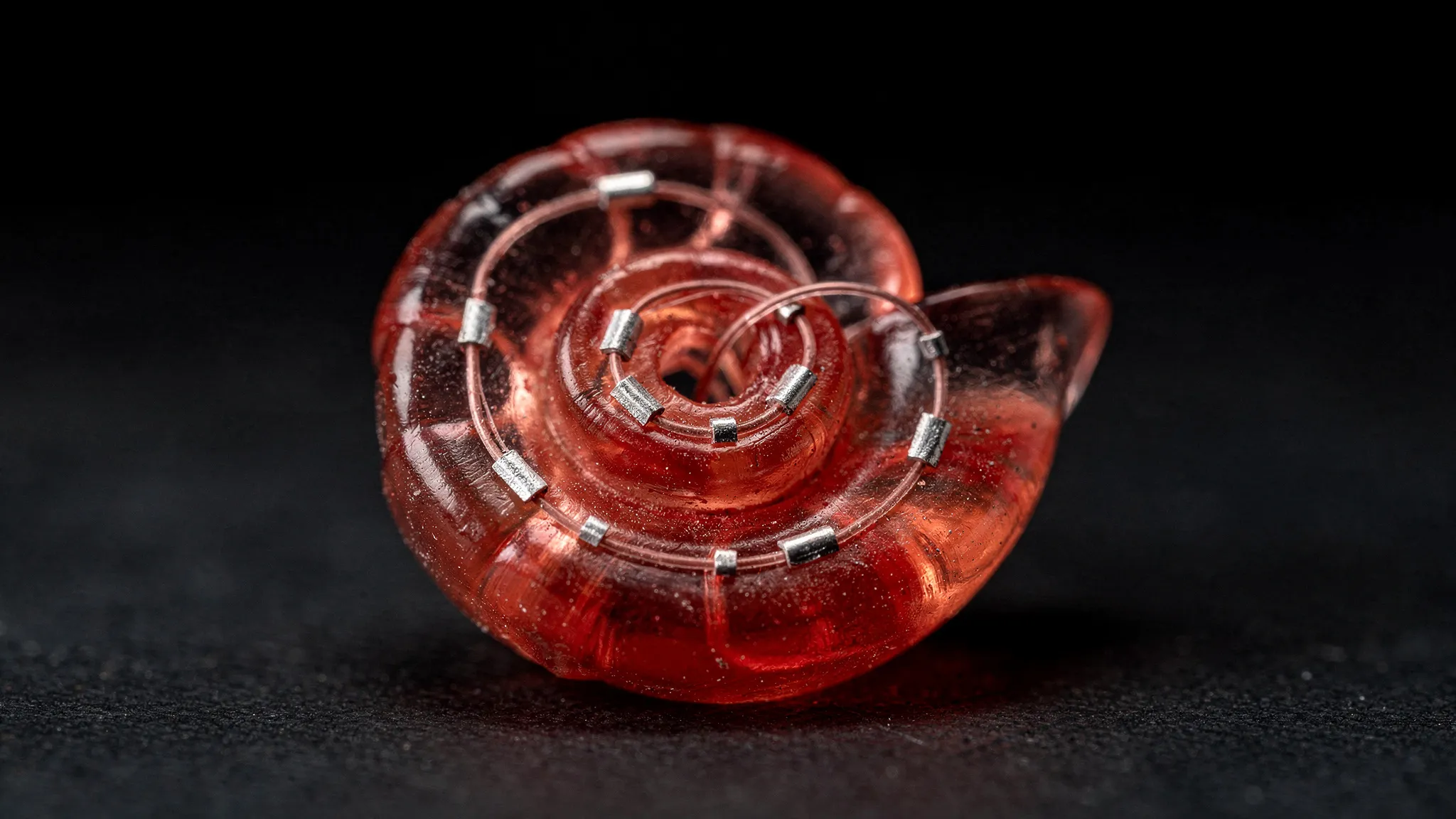
A cochlear implant is a neural prosthesis. Surgeons slide an array of electrodes into the cochlea, in the inner ear, and the electrodes stimulate the fibres of the auditory nerve directly with electric pulses, bypassing the damaged inner ear. An external processor turns sounds into instructions; each electrode handles a band of frequencies, because nerve fibres deeper in the cochlea give low-pitched sensations and shallower ones high-pitched sensations.
The outcome varies enormously. Many users understand speech well; others, the authors note, get little more than an awareness of sound and help with lip-reading. One known factor is the quality of the electro-neural interface: the shape of the ear, where the electrodes ended up, how the tissues conduct electricity, and how many nerve fibres are still healthy. The physics is crude by nature: at most 22 contacts must stimulate up to about 30,000 fibres, so each electrode excites a broad, overlapping crowd of them.
Today, an audiologist tunes each patient’s settings — the “map” — mostly from the patient’s own impressions, and the brain can need weeks or months to adapt to a new map.
A virtual ear, built from objective data
Erin Bratu of the University of Rennes, Jack Noble of Vanderbilt University and colleagues at Vanderbilt University Medical Center, Washington University in St. Louis and the Medical University of South Carolina built a digital twin of each patient’s interface, in three layers:
- Anatomy. Clinical CT scans cannot show the inside of the cochlea, so the team fits a shape model learned from high-resolution micro-CT scans of 16 cadaver cochleae, about ten times sharper. The electrodes are located automatically on the post-operative scan, and the invisible nerve fibres are reconstructed as 75 bundles.
- Electricity. A 3D map of tissues — fluid, soft tissue, nerve, bone — lets the model compute how current spreads. Tissue resistances are tuned until simulated voltages match those the implant records on its idle electrodes; scar tissue is added when the recordings call for it.
- Nerve. A biophysical model of nerve fibres, scaled up to bundles, predicts the nerve’s overall response. The number of healthy fibres in each bundle is then adjusted until the model matches how the nerve’s response grows with current, a curve the implant itself can record.
From this, the team computes a single neural health score per patient.
What the twins predicted
The study covered 30 implant users.
- Responses the model was never trained on. The twins predicted a second kind of nerve measurement with a median error below 50 microvolts; even the worst case kept the right overall shape.
- Speech. The neural health score correlated strongly with word recognition in quiet and with sentence recognition in multi-talker babble. The paper reports correlation coefficients of about 0.75 and 0.78 — although the abstract and the results section swap which value goes with which test. Either way, the score explains 50 to 60% of the differences in speech understanding between patients. To the authors’ knowledge, no single factor reported in the literature explains more.
- Re-tuning. In a preliminary test with six experienced users, the team switched off half of the electrodes in the zone where nerve health looked worst — between 2 and 6 of the 22. Word recognition rose by 10 percentage points on average; five of the six ended above their starting score, none declined substantially, and all chose to keep the new map.
From proof of concept to trial
The twins can only be checked indirectly, since nothing short of post-mortem examination shows the true state of the nerve. The model treats fibres as firing in perfect sync, which probably underestimates how many are healthy, and ignores timing effects; it needs a post-operative CT scan, with its X-ray dose; and all implants came from a single manufacturer. The re-tuning test had no control group and irregular follow-up.
What stands out is the input: nothing but scans and the implant’s own recordings, with no reliance on what the patient reports. That could help those who struggle to describe what they hear, such as young children. A controlled prospective clinical trial of re-tuning guided by nerve health is now in preparation.